
2 Week Japan Golden Route Itinerary for Families: 14 Days in Tokyo, Kyoto, Nara & Osaka

Updated: Sep 28
Planning a two-week trip to Japan? Our 14-day Golden Route itinerary takes you through Tokyo, Kyoto, Nara and Osaka, with a realistic pace for families and enough time for a few memorable day trips and experiences along the way.

We spent time in all four cities during our own 100-day family sabbatical, travelling through Japan with our two daughters. This itinerary is based on what we actually did, what we loved, and the practical things we learned along the way.
From walking through thousands of torii gates at Fushimi Inari, to watching Shibuya Crossing from above, learning how to make sushi in Tokyo, and being headbutted by a bowing deer in Nara (more on that later), there is plenty to keep you busy.
Japan has far more to offer than these four destinations. The Japanese Alps, Hiroshima, Hokkaido and Okinawa could all easily justify a trip of their own. But for a first visit, this classic route gives you a great introduction to Japan without trying to squeeze too much into one trip.
We'd recommend allowing 14 days for this itinerary. That gives you enough time to explore Tokyo, Kyoto, Nara and Osaka without constantly rushing to the next stop, while still leaving room for a day trip or two and some of the experiences worth booking ahead.
If you have more or less time, we've explained how to adjust the route further below. And if you only have a week, our Tokyo 5-day itinerary or Kyoto 5-day itinerary may suit you better.
In this guide, you'll find our realistic day-by-day Japan itinerary, family-friendly things to do, transport advice, hotel suggestions, practical tips and the experiences we'd recommend booking before you go.
Ready to start planning your two-week Japan trip? Let's get into it.
Why This Japan Golden Route Works for Families

Japan offers a unique blend of experiences you won't find anywhere else. Centuries-old temples sit a few minutes' walk from some of the busiest, most futuristic streets on earth, and somehow it never feels out of place.
Add in some of the best food we've ever eaten, warm hospitality everywhere you go, and transport links so good that Google Maps and Google Translate handle almost everything for you, and it's easy to see why so many people fall in love with Japan.
Tokyo, Kyoto, Nara, and Osaka form the classic Golden Route through Japan, the one most first-time visitors build their trip around, and for good reason. All four cities sit on or close to the Shinkansen network, making travel between them fast, comfortable, and remarkably simple.
Japan’s Golden Route does not have one fixed itinerary. At its core, it connects Tokyo, Kyoto and Osaka, although many people add Nara, Hakone, Mount Fuji, Hiroshima or Miyajima depending on how much time they have. Our two-week version follows the central route, with Nara as a stop between Kyoto and Osaka.
They're also major cities with English signage, excellent public transport, and plenty of tourist infrastructure, so you're never far from help if you need it.
For families, it's about as kid-friendly as Japan gets, with temples to explore, hands-on experiences like TeamLab Planets, wild monkeys, bowing deer, and great food at every turn.
2 Week Japan Itinerary at a Glance

This itinerary begins in Tokyo, travels by Shinkansen to Kyoto, includes a day trip to Nara, and finishes with a couple of nights in Osaka before flying home.
During this two-week Japan itinerary, you'll have the chance to explore and experience a variety of amazing sights and activities, including:
Senso-ji Temple and the Kaminarimon Gate
TeamLab Planets, an immersive digital art museum
Shibuya Crossing and Shibuya Sky
Sengaku-ji Temple, home of the 47 Rōnin
A traditional Japanese cooking class
Fushimi Inari's thousands of torii gates
Kinkaku-ji, the Golden Pavilion
The Arashiyama Bamboo Grove and Monkey Park
Daigo-ji, a quiet UNESCO temple most visitors miss
Nara Park's free-roaming, bowing deer
Osaka Castle and Dotonbori's neon streets
This itinerary has been written with families in mind, but it's just as suited to any first-time visitor wanting to see the best of Japan without feeling rushed.
Table of Contents
Tokyo Route Map
Here's a color-coded map showing our day-by-day route through Tokyo, useful for seeing how everything connects and planning your own days around it.
Day 1: Arrive in Tokyo and Keep Things Easy

Give yourself this first day to settle in, especially with kids in tow. Jet lag is real, and Tokyo will still be there tomorrow.
We stayed at the Prince Sakura Tower for our time in Tokyo, and it turned out to be a great fit for our family, with spacious rooms, a stunning Japanese garden with its own koi pond, and an easy walk from Shinagawa Station.
If you land with any energy left, Sengaku-ji Temple, home to the graves of the 47 Rōnin, is an easy walk from the hotel and a great way to ease into the trip without a long train ride on day one. It's a quiet, traditional stop, and one of our favourite experiences in Tokyo, we earned our first goshuin here by copying out a Buddhist sutra.
Read further on Sengaku-ji and collecting goshuin:
Day 2: TeamLab Planets, Toyosu and Odaiba
Highlights: TeamLab Planets, Toyosu Senkyaku Banrai, Odaiba

Start your first full day with TeamLab Planets, a barefoot, immersive digital art museum where parts of the experience take you through water, while others surround you with light, colour, and interactive digital displays. We went in expecting a crowded, overhyped tourist trap. We left with one of the standout memories of our entire trip.
We've written a full guide to visiting TeamLab Planets, covering tickets, what to wear, and what to expect, and our daily diary entry includes lots of photos and video footage from our day.
For food afterwards, Vegan Ramen UZU Tokyo is located inside the museum grounds and is worth trying, though it's popular and can get packed (it was when we visited).
Another great option nearby is Toyosu Senkyaku Banrai, which is a food and entertainment complex designed to recreate the atmosphere of an Edo-period town. There's something for everyone here, yakitori skewers, taiyaki, and fresh sushi among plenty of other options.

In the afternoon, head to Odaiba, which is a short trip from Toyosu and an easy pairing with TeamLab given how close the two areas are.
The life-sized Unicorn Gundam statue at DiverCity Tokyo Plaza is the big photo stop, and Odaiba Seaside Park is a good spot to stretch your legs, with views back across Rainbow Bridge and a small Statue of Liberty replica.
Other things to consider: the Legoland Discovery Center (great for younger kids)
Day 3: Ginza, Zōjō-ji and Tokyo Tower
Highlights: Ginza Six, Uniqlo flagship, Zōjō-ji, Tokyo Tower

For day 3, spend the morning exploring Ginza, Tokyo's upscale shopping district. Ginza Six's rooftop garden and Tsutaya Books are worth a look, and the twelve-floor Uniqlo flagship store is enormous.

For lunch, Yakitori Alley is a set of narrow lantern-lit lanes that are a great spot for something more traditional. It's where we tried our first sashimi in Japan.
In the afternoon, walk to Zōjō-ji Temple, where the balcony offers one of the best free views of Tokyo Tower rising behind the historic temple buildings.

Other things to consider: Hamarikyu Gardens (traditional garden with a teahouse, short walk from Ginza), Tsukiji Outer Market (fresh seafood and street food nearby)
Day 4: Shibuya, Meiji Jingu and Shinjuku
Highlights: Shibuya Sky, Shibuya Crossing, Meiji Jingu, Shinjuku at night

For one of the best views across Tokyo, consider booking tickets to Shibuya Sky.
It's a 360-degree open-air rooftop that gives you views over Tokyo Tower, Skytree, and even Mount Fuji on a clear day, and it's one of the best places to appreciate the scale of Shibuya Crossing before heading down to experience it at street level yourself.

Shibuya Sky is an experience you will need to book ahead of time. I've provided a full breakdown of the experience, including ticketing tips and what to expect, here.

After exploring Shibuya, we recommend heading to Meiji Jingu, which is a Shinto shrine set within a massive 70-hectare private evergreen forest. It's genuinely beautiful, though be prepared for crowds, we'd suggest visiting early or later in the day if you can.

Harajuku is a great place to grab some lunch - we found a small Ramen shop next to MOS burger right across from Harajuku station.
Tokyu Plaza Omotesando Harajuku is worth a quick stop too, home to the famous mirrored entrance escalator that's become one of the area's most photographed spots.


In the evening, head to Shinjuku. It comes alive after dark, with neon signs, a huge 3D cat billboard outside the station, and the famous Godzilla Head a short walk away.

There are almost unlimited dining options in Shinjuku. We had dinner at Shogun Burger for wagyu beef burgers, and it was excellent.

Afterwards, explore some of the area's many arcades, with Taito Station being one of the most popular - it's a fun way to round out the evening.
Other things to consider: Golden Gai (atmospheric bar alleys in Shinjuku, more of an adult evening spot)
Day 5: Sensō-ji, Ueno Park and Tokyo National Museum
Highlights: Ueno Park, Tokyo National Museum, Senso-ji Temple
Today is another busy day, so we recommend starting as early as you can at Sensō-ji Temple, as the earlier you arrive, the quieter it will be.
The Kaminarimon Gate and its giant red lantern are genuinely awe-inspiring, while Nakamise-dori, the market street leading to the temple, is lined with souvenir shops, traditional snacks, and plenty of opportunities to try matcha ice cream (a bit of a specialty here).

There is also a fantastic free observation deck at the Asakusa Culture Tourist Information Center, which provides one of the best viewpoints overlooking Sensō-ji Temple and the bustling streets below.

For lunch, Ameyoko Market is located right alongside Ueno Park and is worth building into your itinerary.
It's a lively street market packed with stalls selling street food, clothing, and bargains. It even has a temple tucked away in the middle of it.

We stopped for takoyaki at Minatoya, a tiny stand known for serving some of the best octopus balls in the city, and also found an excellent katsu curry spot nearby.

After lunch, spend the afternoon in and around Ueno Park, home to some of Tokyo's best museums, temples, and the beautiful Shinobazu Pond. It's a great place to take a leisurely stroll or hire one of the popular swan boats for a paddle around the water.

The Tokyo National Museum houses an incredible collection of samurai armour and swords, and it's one of the best museums we visited during our time in Japan.

As well as the museum itself, it has a wonderful garden at the back, with a quiet, green space that's well worth a slow wander once you're done exploring the exhibits inside.
We've barely scratched the surface of Ueno Park here, there's also Toshogu Shrine (arguably the most beautiful spot in the whole park), a giant whale sculpture outside the Science Museum, and a handful of quieter temples most visitors miss.
We've written a full one-day Ueno itinerary covering all of it.
Other things to consider: Tokyo Skytree (close to Asakusa if you want an alternative view over the city)
Day 6: A Japanese Cooking Class or Another Full-Day Experience
Highlights: Hands-on sushi, udon, and tempura cooking class, free afternoon

If you're interested in cooking, Japanese food, or even just the cultural side of things, I'd highly recommend doing a cooking class.
We went looking for exactly that, and found a cooking, origami and calligraphy cultural experience we booked through Tripadvisor. Across our entire almost two weeks in Japan, this was by far our best experience.
Experience Japanese Culture First-Hand
Learn how to make udon noodles, sushi, and vegetable tempura, participate in a traditional matcha tea ceremony, and try your hand at origami and Japanese calligraphy.
You can read our detailed review of the experience here

If you’re looking for a meaningful way to introduce children to Japanese culture beyond sightseeing, it's the perfect experience!
If you’d like more of the specific details, you can read our daily diary entry here.
Prefer a different kind of day here instead?
A cooking class isn't for everyone, and this slot works just as well as a full day if you'd rather swap it out entirely.

The Ghibli Museum (further out in Mitaka, so best treated as a dedicated day) or Tokyo Disneyland/DisneySea are both popular full-day alternatives worth considering here if they suit your family better.
We haven't visited Disney in Japan, but if it's anything like the experience we had in Hong Kong Disneyland, it's worth considering even if you're not usually a Disney family. Even if you are, it will be unlike what you are used to experiencing in North America.
Kyoto Route Map
Here's a color-coded map showing how we spent our days exploring Kyoto.
Day 7: Travel to Kyoto by Shinkansen and Explore Arashiyama
Highlights: Shinkansen to Kyoto, Arashiyama
Take the Shinkansen to Kyoto in the morning, the journey takes around 2 hours 15 minutes, and if you're travelling from Tokyo, sit on the right side of the train for a chance to see Mount Fuji around 40 minutes in.

Check into your Kyoto hotel, which for us was the DoubleTree by Hilton Kyoto Higashiyama.
It worked really well for our family of four, as it had two double beds plus a window bed that gave us the space we needed. Being based in Higashiyama meant several of Kyoto's best spots were within walking distance. Plus the breakfast was fantastic. Read our full review here.

In the afternoon, head to Arashiyama, one of Kyoto's most scenic districts. While it is best known for its famous Bamboo Grove, Arashiyama has much more to offer than that alone, including temples, parks, and river pathways.

Tenryū-ji Temple and its stunning gardens were among our favourites in Kyoto, and their location next to the Bamboo Grove and Arashiyama Park makes it easy to combine all three in one visit.

Afterwards, follow the river through the park until you reach the lively area around Togetsukyō Bridge, Arashiyama's most famous landmark.
You'll find plenty of restaurants, cafés, and snack stalls nearby if you're starting to get hungry.

If you have energy left, Iwatayama Monkey Park is well worth the climb. It has fantastic views over Kyoto, as well as the chance to see wild macaques up close. As we wrote in our daily diary, we were also impressed by its ethical approach to interacting with and feeding the animals.
This itinerary covers the main highlights of Arashiyama, but there are plenty of other attractions worth considering. Take a look at our full one-day Arashiyama itinerary to help decide what you'd most like to see.
Day 8: Fushimi Inari, Nanzen-ji, the Philosopher’s Path and Ginkaku-ji
Highlights: Fushimi Inari torii gates, Philosopher's Path, Ginkaku-ji (Silver Pavilion)
Fushimi Inari and the Philosopher's Path/Ginkaku-ji sit in very different parts of the city, so start early at Inari to make the most of the day. If you don't have the time or energy to fit everything in, you could save Ginkaku-ji and the Philosopher's Path for the spare afternoon on Day 11 instead of the Nintendo Museum.

Start your day at Fushimi Inari early in the morning if possible, before the crowds arrive. It is one of Kyoto's most popular attractions and can become extremely busy, but it's well worth seeing.
Thousands of red vermilion torii gates wind their way up the mountainside, creating one of Japan's most iconic sights. There's no need to complete the entire hike if you have younger kids - simply continue until the crowds begin to thin, or you've had enough.

If you'd rather visit later in the day, the shrine takes on a completely different character after dark. While the lower paths remain lively, the lit up torii gates create a somewhat eerie atmosphere that our kids loved.
In the late morning, make your way north to the Philosopher's Path, which is a scenic 2km canal-side walk that connects Ginkaku-ji to Nanzen-ji. Even outside cherry blossom season, it's a peaceful stroll through a quieter part of Kyoto, dotted with small temples, cafés, and local shrines.

Walk the path from south to north (starting near Nanzen-ji or Keage Station) and finish at Ginkaku-ji, Kyoto's famous Silver Pavilion.
While it's not covered in silver like its golden counterpart, the temple's weathered wood and beautiful gardens more than make up for it. The grounds include a walking route around ponds, and moss-covered tea houses.

If you have time, Nanzen-ji is located at the southern end of the Philosopher's Path and is also worth the detour. It has the Sanmon Gate that is one of the largest in Japan, and a red-brick aqueduct, built during the Meiji era, that cuts right through the temple grounds, which is a feature that makes it feel quite different from Kyoto’s other temple complexes.
Other things to consider: If you have extra time, explore the temples along the Philosopher's Path like Eikan-do or Honen-in.
Day 9: Kiyomizu-dera, Higashiyama and Gion
Highlights: Yasaka Pagoda, Kiyomizu-dera, Ninenzaka & Sannenzaka
Today covers some of Kyoto's most famous sights and is likely to be one of the highlights of your visit (but it's a busy day).
The Southern Higashiyama district packs together historic temples, traditional streets, old neighbourhoods and some of the city's most recognisable landmarks, all within an area that can largely be explored on foot. That makes it one of the easiest parts of Kyoto to visit independently.

Start at Yasaka Pagoda, which is one of Kyoto's most recognisable landmarks. The five-storey pagoda rises above the traditional streets of Higashiyama and is one of the city's classic views. From here, continue towards Kiyomizu-dera, passing shops and cafés along the way.

Kiyomizu-dera is one of Kyoto's most famous temples, and its enormous wooden stage extends out from the hillside, offering sweeping views across the city.
There are plenty of things for children to see and do here, as well as one of Kyoto's best viewpoints. We cover the temple in more detail in this post.

Afterwards, wander through Sannenzaka and Ninenzaka, two of Kyoto's best-preserved historic streets. Although they can be busy, they're full of character and packed with shops and cafés (this one is worth a visit)

Continue via Ishibe Koji to Ryozen Kannon, which is home to a towering statue of Kannon, the goddess of mercy, that was built as a memorial to those who died in the Second World War.
A short walk away is Kōdai-ji, which is a Zen temple known for its beautiful gardens and even a small bamboo grove, which we actually preferred to the much busier one in Arashiyama.

Finish the day at Maruyama Park and Yasaka Shrine, where you can visit the striking vermilion gate. It's been a long day!
The district of Gion is just a short walk away and makes a great place for dinner. We particularly enjoyed this okonomiyaki restaurant, which was one of our favourite meals in Kyoto.
Day 10: Kinkaku-ji, Ryoan-ji, Nijo Castle and Nishiki Market
Highlights: Kinkaku-ji (Golden Pavilion), Ryoan-ji, Nijo Castle, Nishiki Market

Start your morning at Kinkaku-ji, Kyoto's famous Golden Pavilion. Of all the temples we visited in Kyoto, this was probably the most impressive.
You can't enter the pavilion itself, but there is a walking route that circles the grounds, with several viewpoints of the Golden Pavilion reflected in the surrounding ponds. We spent around 90 minutes here at a relaxed family pace.
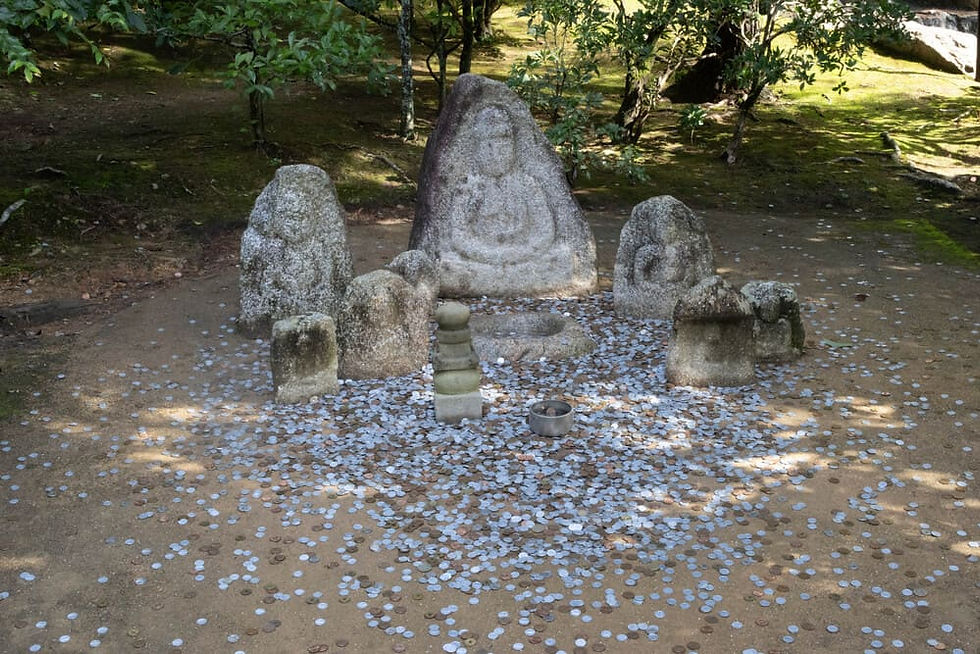
Aside from the temple itself, there are a few other interesting sights along the path, including Anmintaku Pond, which is said never to run dry, and a small stone basin near the exit where visitors toss coins for good fortune.

As you're already in the area, it's worth combining your visit with Ryoan-ji, as it is just a 20-minute walk or short bus ride from Kinkaku-ji. Ryoan-ji is home to one of Japan's most famous Zen rock gardens, and it offers a completely different experience from the grandeur of the Golden Pavilion.
The garden features 15 stones arranged in raked white gravel, with the intriguing detail that one stone is always hidden from view, no matter where you sit.
While younger children may not find it as engaging, it's an excellent introduction to the quieter, more contemplative side of Japanese culture.

In the afternoon, head back to central Kyoto to visit Nijo Castle, the former residence of the Tokugawa shoguns. Its famous "nightingale floors" were designed to chirp underfoot and alert guards to intruders.
Our kids had great fun trying (and failing) to cross them without making a sound.

The castle grounds are equally impressive, with beautifully landscaped gardens and stone walls overlooking the moat. You can climb the steps for some great views over the city.
Afterwards, it's just a 25 to 30-minute walk, or a short subway ride, to Nishiki Market, Kyoto's famous covered food market that stretches across five blocks in the city centre. It's one of the best places to sample local specialties and snack your way through some of Japan's most iconic foods.
If you still have energy and haven't yet visited Pontocho Alley or Teramachi Shopping Street (a covered arcade with souvenirs and snacks), both are close by and offer plenty of options for food and shopping in the evening.
Other things to consider: Ninna-ji Temple (quieter temple with a striking entrance gate, 15-minute walk from Ryoan-ji), Kyoto International Manga Museum (great for kids who love comics and anime).
Day 11: Daigo-ji and a Flexible Afternoon in Kyoto
Highlights: Daigo-ji Temple, Nintendo Museum (Uji)

After a few days of exploring Kyoto's most popular temples and the inevitable crowds that come with them, today's temple is a much calmer UNESCO World Heritage Site, owing to being located a little further from central Kyoto.
We thought it was a bit of a hidden gem, as it was home to one of the oldest wooden structures in Japan, as well as a stunning five-storey pagoda set amongst peaceful temple grounds.
We've written a comprehensive guide detailing the history of the temple, what to see, and everything you need to know before visiting. Read the full guide here.
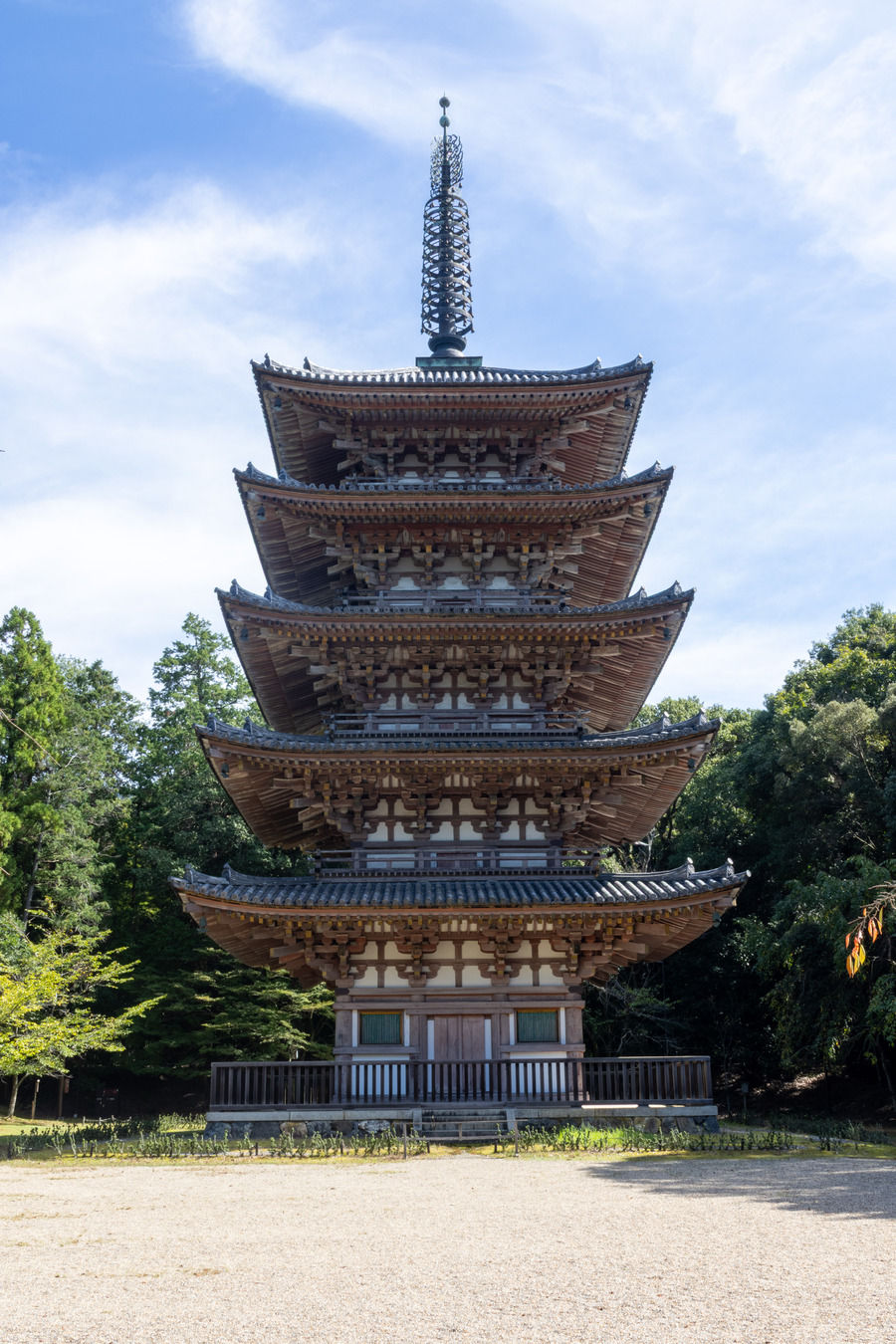
In the afternoon, we'd suggest keeping this time free to tick off any of the experiences you haven't had a chance to do yet, or to enjoy another half-day activity that catches your interest.
Try to Get Tickets to the Nintendo Museum
One unique suggestion that is sure to be a hit with both kids and adults is the Nintendo Museum. We desperately tried to secure tickets, but unfortunately we weren't successful in the ticket lottery and never got the chance to go. But we spent months trying!
That said, if you're able to grab a ticket, it promises to be a fantastic experience packed with Nintendo nostalgia, interactive exhibits, and a fascinating look at the history of one of Japan's most iconic companies.
Don't Miss Out on Nintendo Museum Tickets
Learn from our mistakes and discover the steps we wish we'd known beforehand to give yourself the best chance of getting tickets, including how the lottery system actually works and what you can do if you miss out.
How to Get Nintendo Museum Tickets (Even If You Lose the Lottery)
Other things to consider: If you'd rather skip the Nintendo Museum altogether, this is also a good slot to fit in Ginkaku-ji and the Philosopher's Path instead (see Day 8).
Read further on things to do in Kyoto:
Day 12: Nara’s Bowing Deer and Ancient Temples, Then On to Osaka
Highlights: Nara Park deer, Todai-ji Temple, Kasuga Taisha Shrine
Nara makes a great stop between Kyoto and Osaka. While you absolutely could stay the night and see more of the city, it's also perfectly doable as a day trip, and staying in Osaka gives you the whole next day to explore there.
We actually visited Nara on our way from Kyoto to Osaka, which worked really well. You can store your luggage at the station (both JR and Kintetsu stations have lockers), explore the city for the day, then continue to Osaka.
Nara was actually Japan's first permanent capital and is home to some of the country's most significant temples and the famous bowing deer.

From the station, start exploring Nara Park, where hundreds of wild deer roam freely. These deer are accustomed to visitors and will bow politely in exchange for shika senbei (deer crackers), which you can purchase from vendors throughout the park.
While the deer are fun to interact with, remember they are wild animals. Our daughter Jessica got headbutted by one, so be careful with little ones and supervise closely.

From the park, it's a short walk to Todai-ji Temple, home to the Great Buddha Hall and its massive bronze Buddha statue that's been watched over by visitors for over a thousand years.
While in the park, try to get to Kasuga Taisha Shrine, which is famous for its thousands of stone and bronze lanterns lining the forest path, as well as the Ukimido pavilion, to experience a quieter section of the park.

Once you're ready, take the train to Osaka for your final two nights. We'd recommend making the move today so you can hit the ground running on Day 13.
That said, Nara also has plenty of places to stay if you'd prefer to slow down and spend a little more time exploring before continuing on to Osaka.
Further Nara Content :
Day 13: Osaka Castle, Kuromon Market and Dotonbori
Highlights: Osaka Castle, Dotonbori

Start the morning at Osaka Castle, one of the city's most iconic landmarks. Trust us when we say it is a seriously impressive structure! Be sure to wander through Nishinomaru Garden, which offers some of the best views of the castle and has a picturesque pond that's perfect for photos.

If you'd like to learn a bit more about the city, the Osaka Museum of History is right next door and is well worth a visit. The exhibits show how Osaka has changed over the centuries, and the upper floors offer some great views of Osaka Castle too.

From there, head to Kuromon Ichiba Market, Osaka's famous covered food market. It's a great way to spend the afternoon, grazing your way through fresh seafood, skewers, and street food stalls rather than sitting down for a formal lunch.

In the evening, head to Dotonbori, which is Osaka's famous neon-lit entertainment district. The canal-side walk here is memorable after dark, with giant illuminated signs (including the famous Glico Running Man), street food stalls, and a very different energy to anywhere else on this itinerary.
It's a great way to spend your first evening in the city.
Our Recommended Hotel in Osaka
Looking for somewhere to stay in Osaka? We stayed at the Osaka Station Hotel, Autograph Collection, directly above Osaka Station inside the JP Tower, one of the most impressive hotels we stayed in throughout our entire 100-day sabbatical.
Read our full review here.
Day 14: Universal Studios Japan or a Slower Final Day
Highlights: Universal Studios Japan (or a lighter alternative day)

For your final full day, Universal Studios Japan is the standout option if you want to end the trip on a high, home to Super Nintendo World and The Wizarding World of Harry Potter. It's easily a full day on its own, and one of the best theme parks in Japan.
Tickets sell out, especially on weekends and holidays, so book ahead rather than turning up and hoping.
If a theme park isn't your thing, or you'd rather keep the pace lighter for your last day, a good alternative combination is the Osaka Aquarium (Kaiyukan) in the morning, one of the largest aquariums in the world, followed by the Umeda Sky Building in the afternoon for panoramic views over the city from its rooftop observation deck.

If you'd rather end the trip with one last temple instead, Shitennoji Temple, one of Japan's oldest Buddhist temples, is a quiet, fitting way to close things out before flying home.
How to Adapt This 2 Week Japan Itinerary
10-Day Japan Itinerary: What to Cut
If you don't have 14 days, here are some areas we'd recommend cutting for a 10-day visit:
Cut Day 6 (cooking class) if it's not a priority for your family, or;
Combine Days 10 and 11 into a single, fuller day in Kyoto, or;
Cut one night from Osaka
7-Day Japan Itinerary: What to Cut
For a 7-day trip, we'd consider:
Cut Kyoto down to 3 nights instead of 5, focusing on Fushimi Inari, Kinkaku-ji, and Arashiyama only, or;
Cut Osaka entirely and fly out of Kansai Airport after Kyoto
How to Extend This Japan Golden Route Itinerary
If you have more than 14 days to spend in Japan, there are almost endless possibilities, but these are the additions we recommend considering:
Hakone, for views of Mount Fuji, a cable car up to the volcanic Owakudani crater, and a cruise across Lake Ashi (2 days).
Hiroshima, we felt that our kids weren't old enough to really understand the history, but we hope to return one day when they're older and can better appreciate its significance, but between the Peace Memorial Park and Museum there is plenty to see and do (1-2 days).
Nikko, a day trip from Tokyo known for its elaborate shrines set among ancient cedar forests (1 day).
For a slower family itinerary, adding an extra night in Tokyo or Kyoto can be just as worthwhile as adding another destination. It gives you room to revisit a favourite area, recover from a busy sightseeing day, or choose an attraction around the weather and your children's energy levels.
Where to Stay on This 2 Week Japan Itinerary

Tokyo
We stayed at the Prince Sakura Tower, and it was a great fit for our family. The hotel had spacious rooms, a stunning Japanese garden, and easy access to Shinagawa Station for transport connections throughout Tokyo and beyond.
Kyoto
We stayed at the DoubleTree by Hilton Kyoto Higashiyama, and it was comfortable, well-located for temple-hopping, and had a room setup that worked particularly well for families travelling with children.
We also spent a few nights at Ben's Guesthouse, a more economical option that featured its own kitchen, traditional Japanese-style beds, and a low dining table.
Osaka
We stayed at the Osaka Station Hotel, Autograph Collection, directly above Osaka Station inside the JP Tower. The hotel was possibly the most impressive hotel we stayed in throughout our entire trip, and the automatic toilet was something else!
When Is the Best Time to Visit Japan?
If we had to pick one window, it'd be fall. September through November brings the trip's most comfortable stretch of weather, and by November, proper autumn colour on top of it all.
One thing worth planning around: Chinese Golden Week hits in early October and pulls huge numbers of visitors into Tokyo specifically, so if your dates are flexible, steer clear of that window.
Winter (December–February) is the option most people overlook, but it's worth considering as the crowds thin out, prices drop, and the days tend to be crisp and clear. We haven't done a winter trip ourselves, but friends who skied a few hours outside Tokyo came back raving about it, so it's firmly on our radar.
Spring (March–May) is the one everyone pictures, when cherry blossoms turn the whole country photogenic for a few weeks around late March into early April. The catch is that everyone else has seen the same photos. Crowds and prices both climb accordingly, and you'll want to weigh whether the bloom is worth competing with a few thousand other people for the same shot.
Summer (June–August) is the toughest stretch to travel with kids. We were still getting hit with brutal heat as late as September, so peak summer is a different level entirely. If you do travel in the middle of summer, budget for taxis over walking, and build in more indoor downtime than you'd expect to need.
A few dates worth avoiding altogether, wherever your trip lands:
Golden Week, late April into early May
Obon, mid-August
New Year, late December into early January
Chinese Golden Week, early October (we found this out the hard way, landing in Tokyo right in the middle of it)
How to Travel Japan’s Golden Route

Getting around Tokyo, Kyoto, Nara, and Osaka is surprisingly simple.
We recommend grabbing a Suica or Pasmo IC card as soon as you land, as it works on nearly every train, subway, and bus across all four cities - that way you won't need to think about tickets again.
Whether a JR Pass is worth it comes down to how much intercity travel you're doing. For this itinerary's single Shinkansen leg between Tokyo and Kyoto, it typically won't pay for itself, but it's worth running your own numbers through JRPass.com's fare calculator if your plans differ.
For most families following this exact Tokyo → Kyoto → Nara → Osaka route, buying individual tickets is usually the simpler option. The Shinkansen is the major long-distance journey; Kyoto to Nara and Nara to Osaka are short, easy local-train trips.
For the full breakdown, including how the Suica card actually works day to day, train etiquette, whether taxis are worth it, and a closer look at the JR Pass math, our Tokyo 5-Day Itinerary covers it in much more detail.
Essential Items to Bring
Comfortable walking shoes. We averaged over 20,000 steps a day in Tokyo alone.
A portable charger. Between navigation, translation apps, and photos, your phone will take a beating.
An eSIM sorted before you land. We used Airalo and it worked reliably throughout the trip.
Cash. Japan is more card-friendly than its reputation suggests, but plenty of smaller restaurants and temples are still cash-only.
Got More Questions?
We've put together a much bigger Japan Travel Planning Q&A on our Japan hub page, covering everything from visas and packing, to money, safety, and getting around. It is well worth a look if there's something specific to your trip we haven't covered here.
We hope you enjoy your trip to Japan!


Comments