.png)
The Best Things to Do in Ueno and the Surrounding Area (With a Suggested One‑Day Itinerary)

Updated: Aug 13
If you’re travelling with kids, Ueno is one of the easiest areas to explore in Tokyo. There’s of course the famous Ueno Park, but you’ve also got great museums, a zoo, temples, and lively market streets all within a short walk of each other.
It’s the kind of place where you can mix “grown‑up sightseeing” with kid‑friendly stops without having to rethink your whole day.

This guide shares what we personally did in Ueno, along with practical advice, family‑friendly tips, and our honest take on what’s worth your time. At the end, you’ll find a suggested one‑day itinerary that ties everything together so you can focus on enjoying the day, rather than planning it.
For more of Tokyo beyond Ueno, see our guide to the best things to do in Tokyo with kids.
In this post, we’ll cover:
With all that in mind, here are the top things to do in Ueno.
This post may contain affiliate links. If you click through and make a purchase, I may earn a small commission at no extra cost to you. We only ever share honest reviews of products and experiences we genuinely love.
Map of Things to do in Ueno Park
Whenever we plan a trip, we start with Google Maps to get a feel for the area and plan an efficient route. Below is a map featuring all the major attractions in and around Ueno Park.
To use the map, click the tab in the top left corner to switch layers. To save it to your Google Maps account, click the star next to the title. You can find it later under “Your Places” → “Maps.”
The Best Things to do inside Ueno Park
Ueno Park

When looking for the best things to do in Ueno, Ueno Park is definitely the star of the show, as many of the attractions on this list are either inside the park or right next to it.
Ueno Park is one of Japan’s earliest public parks and the centrepiece of the neighbourhood. It’s a huge, leafy space filled with tree‑lined walkways, small temples and shrines, a fabulous pond, and many of Tokyo’s best museums for kids.
The park is also home to more than 1,000 cherry trees, making it an iconic sakura destination during cherry blossom season, and one of the busiest spots in the city at that time.

Outside of peak bloom, however, Ueno Park has a great balance of vibrancy and quiet: you can easily find pockets of calm and a bit of breathing room away from Tokyo’s crowds, yet it’s just as common to come across street performers around the central paths and open plazas, which gives the park a sense of activity without feeling overwhelming.
Tokyo National Museum

There are several museums scattered throughout Ueno Park, but the Tokyo National Museum is the big one. It is Japan’s largest and oldest museum and sits right inside the park, and houses an impressive collection of art and archeological artifacts that spans many centuries.

Inside, you’ll find everything from samurai armour and Buddhist sculptures to historical textiles and ancient pottery. Even if you’re not usually drawn to museums, this one is really easy to spend a few hours exploring, and has a lot of things that our kids found interesting.
Plan Your Trip: Most museums close on Mondays - check hours before you go.
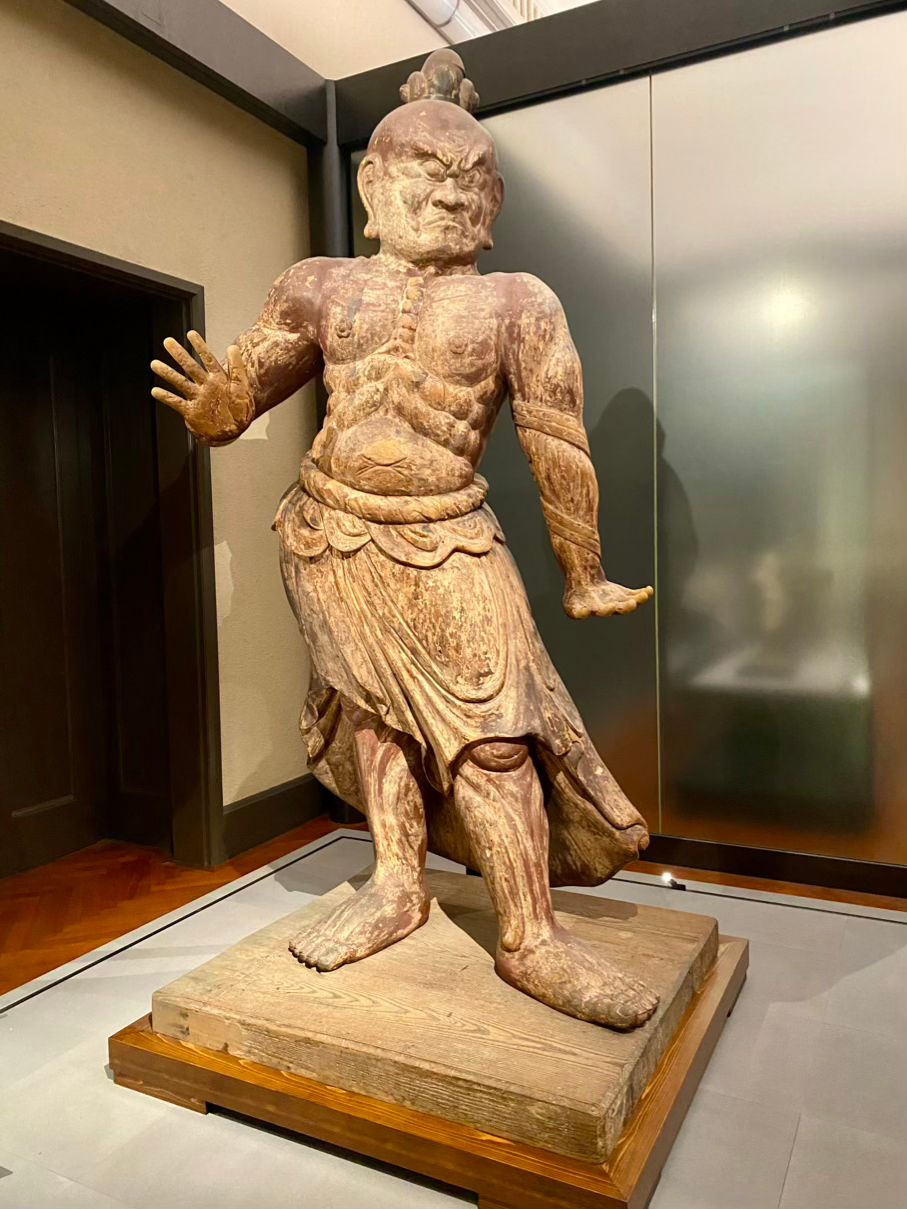
One of the most kid‑friendly activities is the DIY postcard station, where children can create their own Japanese‑style ukiyo‑e print using a variety of ink stamps. It makes for a charming keepsake and a fun, hands-on experience for the little ones.

Shinobazu Pond

Shinobazu Pond is the famous lake at the southern end of Ueno Park and one of the park’s most recognisable attractions. Interestingly, the pond was originally developed to model Lake Biwa in Shiga Prefecture (Japan’s largest lake) which explains its distinctive shape and layout.
Info: Most people don’t realise that Shinobazu Pond is actually divided into three distinct sections: the lotus‑covered Hasu Pond, the Boat Pond with its famous swan paddle boats, and the Cormorant Pond, which forms part of the zoo’s bird sanctuary.
The Lotus Pond is the part that wraps around the small island where Bentendo Temple sits. In summer, it’s completely blanketed in huge green lotus leaves, it’s a pretty amazing sight and one of the most photographed corners of Ueno Park.
The Boat Pond, on the other hand, stays clear of lotus plants and is where you’ll find the swan pedal boat rides. They’re a lot of fun, though definitely not designed with tall people in mind!

Kiyomizu Kannon-do

Kiyomizu Kannon‑do is a historic and significant temple in its own right, and it stands as one of the oldest surviving buildings from the former Kan’ei‑ji complex in Ueno Park.
It’s best known, however, for its iconic stage‑like veranda overlooking Shinobazu Pond and for the celebrated “Moon Pine,” a circular pine tree that creates a picture‑perfect view down toward the Shinobazu‑no‑ike Bentendō temple.

Shinobazu-no-ike Bentendo Temple

One of the unique features of Shinobazu Pond is that it has an island temple in the middle, known as Shinobazu‑no‑ike Bentendo.
To reach it, you cross a short causeway lined with food stalls, which is quite a lively section of the park. When we visited, a group was performing traditional drums, and it looks like the space is regularly used for performances, so you're likely to find something going on, especially on weekends and holidays.
Ueno Toshogu Shrine

While Bentendo Temple may be the most well-known temple in the park due to its location, I genuinely believe that Ueno Toshogu Shrine is the most beautiful.
The shrine dates back to the Edo period and you can really see the history in all the details. The approach to the temple is gorgeous too, with stone lanterns lining the path up to the entrance.
When you reach the temple, The Karamon Gate is stunning up close. It’s covered in gold leaf with carvings of birds and flowers, and the pillars even have dragons carved into them.
It’s a fantastic spot to collect a goshuin! Not sure what a goshuin is? We’ve got a full guide covering everything you need to know.
Kaneji Temple

Kaneiji Temple may appear modest today, but it was once one of Japan’s most powerful and expansive temple complexes.
In fact, all of Ueno Park was originally part of its vast grounds, which included more than 30 buildings and served as a spiritual centre for several Tokugawa shoguns.
Although much of the temple complex was destroyed over the years, the remaining halls and pagoda still echo its former grandeur. It’s a bit off the beaten path, so it might not appear on everyone’s itinerary, but the trade-off is that it’s much quieter than many of the other temples.
Gojo Ten-jinja & Hanazono Inari Shrines

Gojo Ten Shrine and Hanazono Inari Shrine sit side by side, making them easy to visit while walking between Shinobazu Pond and Ueno Toshogu Shrine.
Gojo Ten Shrine is dedicated to healing, medicine, and learning, whereas Hanazono Inari Shrine is famous for its striking tunnel of red torii gates honoring the Inari deity.
Though compact, the torii pathway evokes the atmosphere of Fushimi Inari Taisha—just on a more intimate scale.
Exploring Ueno Park’s Museums

We’ve already covered the Tokyo National Museum above as the largest and most comprehensive museum in the park, but it’s far from the only option here.
Ueno Park is home to several other excellent museums, each offering something a little different depending on your family’s interests.
Plan Your Trip: Many museums close on Mondays - check hours before you go.
For science-focused fun, the National Museum of Nature and Science is a great option for families with kids.
Even if you don’t plan to go inside, the massive blue whale sculpture out front is great for a photo and gets everyone excited, plus there is no admission ticket needed to get up close to it either.
If you do head inside, you can explore two main buildings: one focused on Japan’s natural history, and the other filled with exhibits on science and discoveries from around the world.

Art lovers have plenty of choice, too. The Tokyo Metropolitan Art Museum hosts a rotating lineup of special exhibitions, and while Western art might not be on everyone’s radar when visiting Japan, the National Museum of Western Art is top‑class museum and worth a visit.
You’ll also find the smaller Shitamachi Museum, which offers a glimpse into Tokyo’s old downtown life, and Ueno Royal Museum that hosts a changing lineup of special exhibitions throughout the year, so check the museum’s website to see what’s on during your visit.
Ueno Zoo (and why We Didn’t Visit)

You might be wondering why Ueno Zoo appears at the bottom of this list? After all, it’s one of Japan’s oldest and most famous zoos, and practically synonymous with Ueno and its park.
Well, it is, but we decided not to visit.
Many of the reviews we read online suggested that some animals aren’t kept in ideal conditions, and we like to try and use these opportunities to educate our kids on animal welfare, so in the end, we decided to skip it.
This isn't to say that you shouldn't visit - it's just a decision you have to make after doing your own research.
Also, as of 2026, the pandas that once called Ueno Zoo home have returned to China, following worsening diplomatic relations between the countries.
So if seeing pandas was a big reason you wanted to visit, just know they’re no longer at the zoo.
Things to do Beyond Ueno Park
While many of Ueno’s highlights are centered around the park, the surrounding neighborhood has plenty going on, including some of Tokyo’s most famous attractions just a short walk away.
Ameyayokocho (Ameyoko) Street Food Market

If like us, you enjoy sampling as much street food as possible, I’d highly recommend Ameyoko Market. It’s located between Ueno and Okachimachi Stations and is one of the liveliest market streets in Tokyo.
There are some fantastic street food stalls, including the famous takoyaki “hole-in-the-wall” Minatoya, which is known for serving some of the best octopus balls in the city. It's one of our recommended food experiences when visiting Japan.
If you've never tried them, takoyaki are balls that are crispy on the outside and soft and gooey in the middle, with a single piece of octopus inside - sounds weird but they are delicious! There are also some sit-down restaurants nearby; during our visit, we found an excellent katsu curry spot as well.
If you’re looking for more ideas, I pulled together a full list of 30 kid‑approved foods in Japan - you never know, your kids might find a new favourite.
Inside the market, you’ll also find the small temple Tokudaiji Temple, which is worth a quick stop as you literally walk right past it on the way to Ueno park.
Ueno Night‑Time Bar Tour

No list of things to do in Ueno would be complete without mentioning its vibrant nightlife!
After dark, the area around Ueno and Okachimachi Stations comes alive with narrow alleys, glowing lanterns, sizzling yakitori, and locals enjoying a beer.
Guided bar or izakaya tours are great for discovering hidden spots, sampling classic dishes like karaage, gyoza, yakitori, and enjoying drinks in a down-to-earth atmosphere.
<script async src="https://tpemb.com/content?trs=438690&shmarker=653018&place=Eat%2FDrink%20like%20a%20LOCAL-Taverns%20%26%20Ramen%3A%20Tokyo%20Ueno&items=3&locale=en-US&powered_by=true&campaign_id=108&promo_id=4039" charset="utf-8"></script>
Alternatively, simply wander the alleys around Ameyoko for casual dining and drinks.
Cherry Blossom Viewing (Seasonal)

If you’re visiting in late March or early April, Ueno Park transforms into one of Tokyo’s most festive and colorful destinations.
The park’s pathways and ponds are lined with hundreds of blooming cherry trees, creating breathtaking scenery perfect for hanami (flower-viewing) picnics.
During this season, it becomes one of the busiest spots in Tokyo, so expect large crowds, food stalls, and a lively, but bustling, atmosphere as locals and tourists alike celebrate the arrival of spring.
Sensō-ji Temple

Although not technically in Ueno, Sensō-ji is close enough that it’s well worth adding to your itinerary while you’re in the area. It's located in nearby Asakusa, and is Tokyo’s oldest and most famous Buddhist temple.
Approaching the temple is part of the experience. You’ll first walk up the lively Nakamise Street, lined with traditional snacks, sweets, and souvenir stalls - it's a great place to pick up small gifts or buy some matcha ice cream!

At the end of the street, you pass beneath the huge Kaminarimon (Thunder Gate), instantly recognisable by its enormous red lantern, before reaching the main hall.
Then there is the five-storey pagoda standing beside it, that is some of the most extraordinary architecture I’ve seen in Japan - it’s one of the tourist spots that truly lives up to the hype!

After exploring Sensō-ji Temple, head to the nearby cultural center, which offers a free viewpoint over Nakamise Street and Sensō-ji, giving you a fresh perspective of the area.
If you’re travelling with kids, it’s worth pairing your visit with a walk along the nearby Sumida Park by the river, where they can burn off some energy while enjoying fantastic views of the Tokyo Skytree.
Suggested One‑Day Ueno Itinerary
Sensō-ji and Ueno Itinerary
This itinerary connects historic Asakusa with the cultural heart of Ueno. It’s a wonderful way to spend a day exploring Ueno and the surrounding neighbourhoods, blending some of Tokyo's most famous temples, lively street food, peaceful green spaces, and world-class museums.
This works well as a sub-itinerary for our overall 5-day Tokyo itinerary
Sensō-ji Temple → Sumida Park → Asakusa Cultural Tourist Center → Ameyoko Food Market → Tokudaiji Temple → Ueno Park → Kiyomizu Kannon-do → Shinobazu Pond & Bentendo Temple → Gojo Ten-jinja → Toshogu Shrine → Museum of Choice
Sensō-ji (Start Early)
Begin your day at Tokyo’s oldest and most famous temple, Sensō-ji. Try to arrive before 9:00 a.m. to give you the best chance to explore Kaminarimon Gate, Nakamise Street, and the main hall with fewer tour groups. Even with crowds, the five-storey pagoda is something special.
Sumida Park (Tokyo Skytree Views)
From Sensō-ji, walk about 10 minutes to the river to Sumida Park. The riverside paths offer some of the best open views of Tokyo Skytree and the park is a great way to take it all in.
Asakusa Culture Tourist Information Center
Before leaving Asakusa, consider a quick stop at the Asakusa Culture Tourist Centre. There is a free observation deck on the top floor that gives you a fantastic view back over Sensō-ji and Nakamise Street.
Walk or Train to Ameya-Yokocho (Ameyoko Food Market)
From Asakusa, you can either enjoy a 25-minute walk toward Ueno or take the train to Ueno-Hirokoji Station, the closest stop to the entrance of Ameya-Yokocho (Ameyoko Market). Keep an eye out for the tiny hole-in-the-wall stand serving takoyaki - they’re some of the best in Tokyo.
Tokudaiji Temple
It’s not a must-see compared to some of the more impressive temples within Ueno Park, but it’s located smack bang in the middle of Ameya-Yokocho market, making it an easy and quick stop.
Kiyomizu Kannon-do
Plan to enter Ueno Park via the side closest to Ameya-Yokocho and make your way directly to Kiyomizu Kannon-do. Modeled after Kyoto’s famous Kiyomizu-dera, this wooden hall perches on a small hillside overlooking Shinobazu Pond, making it one of the most photogenic spots in the entire park.
Shinobazu Pond & Bentendo Temple
Walk down toward the pond and cross to Bentendo, which is the temple located on an island in the middle of the park. Behind the temple, you’ll find the Shinobazu boat pond area where you can rent one of the iconic swan-shaped pedal boats - a great kid friendly activity!
Gojo Ten-jinja
Gojo Ten is a small but charming temple, best known for its striking torii pathway. It is conveniently located on the route to Ueno Toshogu Shrine, so it makes for a quick and worthwhile stop.
Ueno Toshogu Shrine
This is arguably the most beautiful temple in Ueno Park. The shrine features elaborate gold detailing and intricate carvings, making it one of the most visually striking stops of the day
Museum of Your Choice
Ueno Park is home to several excellent museums, so you can tailor the end of your itinerary based on your interests:
Tokyo National Museum – Japan’s premier museum for traditional art and samurai artifacts.
National Museum of Nature and Science – Dinosaurs, space, and science exhibits.
Tokyo Metropolitan Art Museum – Rotating art exhibitions.
Spending 1–2 hours here is the perfect way to round off the afternoon.
Looking for a hotel in Tokyo? We highly recommend the Prince Sakura Hotel in Shinagawa. It’s a family-friendly stay with excellent transport links, great amenities, and a beautiful Japanese garden.
Getting to Ueno Park
Ueno Park is located in central Tokyo and is easily accessible using multiple convenient transport options. The fastest and most reliable way to get there is by train, though buses and taxis are also available. Check out our Google Map for a clear visual guide to getting there

By Train (Fastest and Most Reliable)
The easiest way to reach Ueno Park is via JR lines or the Tokyo Metro. From Tokyo Station, take the JR Yamanote Line or Keihin-Tohoku Line to Ueno Station - the ride takes about 8–10 minutes. You can view the Tokyo subway map here.
Insider Tip: For our itinerary, either exit from Ueno-Hirokoji and walk through Ameyoko Market, or take the Ueno Park Exit. This puts you right at the southern edge of the park near the pond, so you can start your itinerary immediately.
By Bus (Budget-Friendly but Slower)
Several Toei and Tokyo Metro buses stop near Ueno Park. While fares are inexpensive, travel times vary depending on traffic, and it can take 25–40 minutes from central Tokyo. There aren't many situations where I would recommend getting a bus, but you can catch one from Sensō-ji if you prefer.
By Taxi (Comfortable but Can Be Costly)
A taxi from central Tokyo will take around 15–25 minutes, depending on traffic. This is convenient if you’re traveling with luggage or in a group, but it is the most expensive option.
More About Us
We’re a British‑Canadian family with roots in the UK. Before putting down roots, we spent many years living, working, and exploring across the Middle East and Asia.
In 2012, we relocated to Canada, where we’ve continued our love of discovery—travelling widely across the country and enjoying countless days in the Canadian Rockies, which happen to be right on our doorstep.
We’ve always believed that children learn best by immersing themselves in the world: seeing it, touching it, tasting it, and truly experiencing it.
That philosophy inspired a bold decision a few years ago—we pulled the kids out of school for 100 days travelling through Asia, Australia, and New Zealand.
It turned out to be an unforgettable adventure and one of the most rewarding choices we’ve made as a family.
Now, we want to share what we’ve learned to help inspire other families to travel more - with travel planning tips, honest reviews, and itineraries that actually work with kids.
If you want to follow along, you can read more about our big trip here, or dive into our Travel Journal Index to get the day‑by‑day details of our journey.
Still Planning Your Trip to Japan?
If you’re still planning your trip to Japan and looking for ideas on what to see and do, we’ve got plenty of guides to help you make the most of your visit:
Review of The Prince Sakura Tower in Shinagawa - A family-friendly hotel with excellent amenities and a beautiful Japanese garden.
Sengaku-ji Temple Tokyo: Visiting the Temple of the 47 Ronin - Discover the history and culture behind this famous site.
Shibuya Sky – A guide with everything you need to enjoy one of Tokyo’s most iconic experiences, including tips on how to secure the prized sunset tickets.
A kid-friendly sushi class – Our favourite experience HANDS DOWN in Japan.


Comments