.png)
Tokyo 5‑Day Itinerary for First‑Time Visitors (Family‑Friendly Guide)

Updated: Sep 28

If you enjoy a mix of ancient temples, futuristic technology, and world-class food, Tokyo is one of the most kid-friendly cities in the world and an exciting place to explore as a family.
So, is 5 days enough time in Tokyo?
It's one of the world's largest cities, and while there's more than enough to fill a few weeks, or even months, you can still cover a lot in five days and come away feeling like you've really experienced it.
We spent five days exploring Tokyo as part of our 100-day round-the-world family sabbatical, and even after returning to Canada, it was one of the most memorable parts of our entire journey. If you're new here, you can read more about our family here.
This itinerary focuses on exploring Tokyo’s highlights, from temples and traditional culture to the neon lights the city is famous for. It's the result of months of planning and learning from our own mistakes.
If you're still in the inspiration phase of planning your trip, check out our complete guide to the best things to do in Tokyo for even more ideas.
That said, planning our trip wasn’t easy. Between choosing neighborhoods to explore, working out how to group attractions into daily plans, navigating the train system, and setting realistic expectations, it quickly became a lot to manage.
If planning your trip feels overwhelming, this 5-day Tokyo itinerary is designed to make things easier. It’s based on our own experience travelling through Japan with kids, including a few things we learned the hard way, and is full of practical tips and family‑friendly ideas.
Ready to start planning your Tokyo adventure? Let's get into it.
This post may contain affiliate links. If you click through and make a purchase, I may earn a small commission at no extra cost to you. We only ever share honest reviews of products and experiences we genuinely love.
5 Day Tokyo Itinerary with Kids - at a Glance
In a rush? Here's a quick glance at the daily itineraries. Whether you have a day, a full weekend, or longer, we suggest starting here. To jump ahead to a certain section, click the links below:
Table of Contents
Explore your local area
Toyosu & Odaiba
TeamLab Planets
Ginza Six Mall & Uniqlo Flagship Store
Tokyo Station's Character Street
The Imperial Palace
Tokyo Tower
Shibuya Sky observation deck
Shibuya Crossing
Harajuku
Meiji Jingu Shrine
Shinjuku at night
Senso-ji Temple and Nakamise-dori shopping street
Asakusa Culture Tourist Information Center
Ameyoko Market street food
Ueno Park & swan boats on Shinobazu Pond
Tokyo National Museum
Akihabara
Homecoming TAKA cooking, calligraphy and origami class
Tokyo DisneySea or Tokyo Disneyland
Studio Ghibli Museum
Sengaku-ji Temple (47 Ronin)
Our Top Accommodation Pick
Best Time to Visit
How to Get Around
Spending More Time in Japan?
This itinerary covers Tokyo well on its own. But if you can stretch your trip out, our 2 Week Japan Itinerary builds on everything here and adds Kyoto, Nara, and Osaka to the mix, well worth a look if Japan is turning into more than just a Tokyo trip.
Read Our 2 Week Japan Itinerary here.

Tokyo Itinerary Google Map
Whenever we plan a trip, we always start with Google Maps. It helps us visualize locations and create efficient itineraries. We've added all the sights and attractions to the map below to help you see where everything is and plan your own itinerary.
To save the map to your Google Maps account, click the star next to the title. To access it later, open Google Maps, go to "Your Places," and find it under "Maps."
Day 1 - Toyosu, Odaiba & TeamLab Planets

After a long flight from Calgary, we arrived in Tokyo exhausted and jet-lagged. If there's one piece of advice we can give you about Day 1, it's this: keep your expectations low and your plans flexible.
Jet lag is no joke! We were all awake by 3:30am, so rather than jumping into a full itinerary, we took it slow, and we suggest you do the same with kids.
Here's how we recommend spending your first full day in Tokyo.
Explore Your Local Neighborhood
Start your first day by getting to know the area around your hotel. Everything will feel exciting, unfamiliar, and maybe a little overwhelming, so giving yourself a slow first morning really helps.
Jet lag hits differently for everyone, and there is a good chance you might want to head back for a mid afternoon rest. Staying close means you can explore without pressure, and reset if you need to.
Use this time to figure out where your nearest train station is, and which convenience stores you will rely on for snacks, drinks, and quick breakfasts.
Wandering locally is also where unexpected places tend to show up. We discovered Sengaku-ji temple that was just a short walk from our hotel, and it ended up being one of our favourite temples. Slow starts often lead to the best surprises!
Pro Tip: Don't underestimate Japanese convenience stores. They have a great selection of food - from onigiri (rice balls) to packaged sandwiches and pastries.
TeamLab Planets - An Immersive Digital Art Experience

In the afternoon we'd recommend heading over to TeamLab Planets in Toyosu. It’s something you need to book ahead of time, so we found the first day perfect as we could plan ahead.
It’s such a unique experience and kind of encapsulates everything Tokyo is about, and it got the girls excited to explore more of Japan.
TeamLab Planets is not your typical museum. The phrase “immersive experience” is often bandied around nowadays, but this is one experience where the term actually applies. You don’t just look at the artwork - you walk through it, touch it, and there are even a few rooms where you wade through it!

Every part of the experience is unique. In one room, we waded barefoot through knee-deep water as digital koi swam around our feet. Other rooms used lights and mirrors to create reflections that seemed to stretch into infinity.
Many exhibits lean heavily into technology, letting you interact using an app on your phone. The girls had fun playing the “Catch and Collect Forest” game, as they hunted extinct animals along the walls and learned about each species. Maybe screen time can sometimes be educational!

And of course, there is the incredibly 'Instagrammable' floating garden, where hundreds of real orchids hover up and down as you pass through.
Resources for Visiting TeamLab Planets
Want more details and plenty of photos? Check out our dedicated guide to visiting with kids, as well as our daily diary entry from our visit.
Tickets often sell out, so be sure to book in advance.
First-time visitor? See our TeamLab Planets guide for tips to get the most out of your visit.
Things to Do Close to TeamLab Planets
TeamLab Planets is located a little outside Tokyo’s main sightseeing areas, but there are still plenty of family friendly activities in the surrounding area. Odaiba is also close, adding even more options if you want to keep exploring.
Here are some of the best things to do near TeamLab Planets.
Toyosu Fish Market
Toyosu Fish Market opened in 2018 and replaced the former Tsukiji Market as Tokyo’s main wholesale seafood market. If you are prepared to wake up really early (arrive around 5am) you can watch the famous tuna fish auction.

If waking the kids at 4:30 a.m. sounds impossible, don’t worry - there are still plenty of fantastic restaurants serving incredibly fresh sushi, so it’s well worth visiting later in the day.
Toyosu Park
Toyosu Park is just a five-minute walk from TeamLab Planets and has open green spaces where kids can run around, along with a playground and a splash park in summer. It’s also a great spot to enjoy views over Tokyo Bay.
Kidzania
We didn’t visit KidZania ourselves, but having been to similar attractions in the UK and Canada, we know it’s great for younger kids. Children can dress up and try out different jobs in a child‑sized city, which makes it both fun and educational. It’s a perfect add-on activity if you have extra time or if the weather isn’t playing ball.
Life-Sized Unicorn Gundam Statue
A little further from TeamLab Planets, in Odaiba, is a life-sized Unicorn Gundam statue, which lights up at set times during the day. It’s right next to DiverCity Tokyo Plaza, which is a mall with plenty of food options and shops like H&M and UNIQLO.

Odaiba Seaside Park
Odaiba Seaside Park is a waterfront area with walking paths, a small man-made beach, and plenty of space for kids to burn off some steam.
There’s also a replica Statue of Liberty, which is ideal if you don’t fancy visiting the US right now (as a Canadian, the less said about that, the better!), and a small LEGOLAND Discovery Center which is great for young kids.

Where to Eat Near TeamLab Planets
When it comes to food, TeamLab Planets is a bit out on its own. There aren’t many options right next door, but if you know where to go, there are several good choices within about a ten-minute walk.
Vegan Ramen UZU Tokyo
If you are looking for convenient, you can’t get any more than Vegan Ramen UZU Tokyo, as it is actually located inside the garden area of TeamLab Planets. It is one of the only places to eat immediately nearby and is a good option if you want something quick after your visit.
It was absolutely packed when we visited, but it gets some great reviews!
Toyosu Senkyaku Banrai
After our visit, we walked to Toyosu Senkyaku Banrai, an outdoor food court designed to look like a historic Edo-style village.
It’s quite touristy and a little on the expensive side, and the focus is very traditional Japanese food, so it might be tricky for picky eaters who prefer familiar options.
That said, we found a yakitori stall where the kids shared chicken and beef skewers, which worked perfectly. You’ll find everything from sushi and ramen to wagyu beef skewers, making it a great place to order a mix of dishes and let everyone try a bit of everything.
We didn't realise this at the time, but there is apparently a free foot bath on the 8th floor too!
Day 2 - Ginza, Tokyo Station & Zojo-ji Temple
For day 2 of this itinerary, we’re heading to Ginza, which is Tokyo’s upscale district that combines luxury shopping, art galleries, and iconic department stores.
If you want a more in-depth look at our day exploring Ginza, you can read our full day-by-day account in Day 3 of our travel diary.
Ginza Six Mall
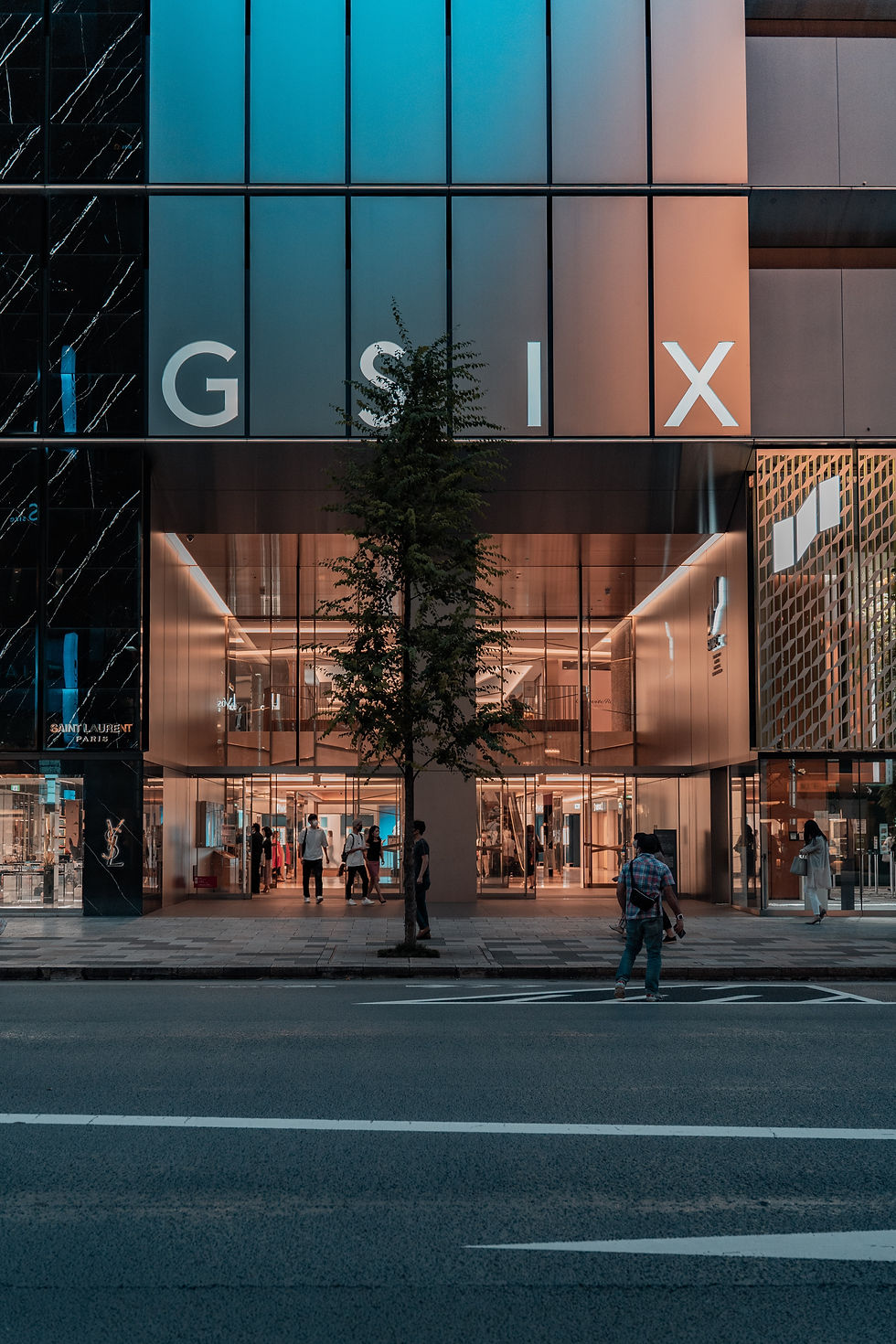
Ginza Six is a high-end mall in Ginza, with luxury stores spread across multiple floors. The highlight is the free to visit rooftop garden, as you get great views down Ginza’s main shopping street and the massive flagship Uniqlo store across the road.
Be sure to check out Tsutaya Books, which is a beautifully designed bookstore well worth visiting, even if you don’t plan to buy anything, as it almost feels like walking through an art gallery.
Uniqlo Flagship Store

If you love Uniqlo as much as we do, a visit to the Tokyo flagship store definitely deserves a spot on your Ginza itinerary!
The store spans a whopping twelve floors and, while much of the clothing is similar to what you’ll find elsewhere, there are Japan-exclusive items, and even a fresh flower shop inside, which is quite unusual!
Ginza Itoya Stationery Store
Our favourite store in Ginza was Ginza Itoya, which is probably the most beautiful stationery shop I've ever seen. It was filled with beautiful writing paper, postcards, pens, and notebooks.
If you're planning to collect goshuin (temple stamps) during your trip, they sell some gorgeous goshuincho in the store.
We've put together a simple guide that explains how goshuin collecting works: A Family Guide to Collecting Goshuin & Eki Stamps in Japan.
Hakuhinkan Toy Park
Depending on your child’s tolerance for hearing the word “no,” this store can be either magical or completely overwhelming!
It’s a multi-floor toy store with everything from classic toys to the latest Japanese games. You’ll find plenty of unusual Japanese toys you won’t see anywhere else, plus arcade games and even an electric race track that kids can actually play with.
The Imperial Palace

We tried to visit the Imperial Palace on our visit, but we ended up missing out due to getting our days mixed up - lesson learned!
The palace and East Gardens are closed to general entry on Mondays and Fridays, so on those days you’ll need to book a guided tour if you want to go inside the grounds.
Don’t make the same mistake we did! You can book a guided tour here to make sure you don’t miss out.
Outside of Mondays and Fridays, the East Gardens are open to the public without booking on a tour.
Even if you don’t go inside the gardens, be sure to stop at the Seimon Ishibashi viewpoint, which beautifully frames the historic bridge with the palace in the background.

Tokyo Station - Character Street
You’ll likely arrive or depart through Tokyo Station, and beneath it is an entire underground shopping area that includes Character Street, which is a long corridor filled with shops selling character‑themed merchandise like Pokémon, Hello Kitty, and Mofusand.

This is where the girls really got into collecting stamps - what started as just a couple in their books quickly turned into a full‑blown obsession for the rest of the trip, and honestly, it’s great fun!
Tokyo Tower

You can go up Tokyo Tower at night, and the views are undoubtedly spectacular - but it’s also one of those landmarks that looks even better when admired from a distance or from below. You can book discounted tickets here.
For sweeping night city views, we also recommend Shibuya Sky, although in this itinerary we are suggesting a morning time slot, which tends to work better for families with kids.
If you’re visiting Tokyo Tower during the day, a stop at Zojo-ji Temple gives fantastic views of the tower framed by the historic temple in the foreground. It was a bit rainy when we visited though!

Yakitori Alley
If you’re on the lookout for authentic Japanese food close to Ginza, we recommend Yakitori Alley in Yurakucho, which is a narrow street lined with small restaurants and 'izakayas' under the train tracks.

It’s full of neon signs and Japanese lanterns, making it fun for photos, plus it's where our girls tried their first sushi in Japan! Be warned, most of the menus are fully in Japanese - Google Translate is your friend!
Looking for more Japanese food inspiration? We’ve put together a blog post with our 30 favourite kid‑friendly foods - perfect for helping your little ones discover new favourites.

Day 3 - Shibuya, Harajuku, Meiji Jingu & Shinjuku
Day 3 of this Tokyo itinerary is all about diving into the city’s energy. We start off with stunning skyline views and the hectic crossing in Shibuya, before visiting iconic shrines and experiencing Tokyo at night in Shinjuku, walking the busy streets, marveling at the 3D cat billboard, and playing games in multi-story arcades.
Shibuya Sky Observation Deck

Start your morning at Shibuya Sky, which is one of Tokyo’s newest observation decks. It’s extremely popular, especially around sunset, when people try to catch the perfect “three sky” view of day, sunset, and night.
For families with kids, we actually recommend visiting during the day. It’s a great way to get your bearings, spot Tokyo Tower (which you may have seen yesterday), and on a clear day, even catch Mount Fuji in the distance. Plus due to the dynamic pricing, it's actually cheaper!
For more details on tickets, best times to visit, and tips for families, check out our full guide: Visiting Shibuya Sky with Kids.
Shibuya Crossing - The World's Busiest Intersection

No trip to Tokyo is complete without experiencing Shibuya Crossing at street level. It’s one of the world’s busiest intersections, and kids love the organized chaos as people crisscross in every direction.

After exploring at ground level, we recommend getting a view from above for a different perspective. Shibuya Sky has a great vantage point, but if you're looking for a cheaper option, we highlight the best free viewpoints over Shibuya Crossing in this post.
Takeshita Street & Harajuku
After exploring Shibuya, take the short walk to the district of Harajuku and Takeshita Street. This narrow pedestrian street is packed with brightly lit shops selling everything from electronics to wacky clothing, and it’s a great place to see Tokyo’s more expressive side of street fashion.
While you are in the area, make sure to stop at Tokyu Plaza, which is famous on Instagram for its mirrored escalator entrance. It’s a fun photo stop and an easy addition to your Harajuku itinerary.

Meiji Jingu Shrine

Next, make your way to Meiji Jingu Shrine, which is one of Tokyo’s most iconic Shinto shrines. The shrine is set within a peaceful forested area that feels completely removed from the hustle and bustle of Shibuya and Harajuku.
The shrine is famous for its beautiful traditional architecture and the huge display of aged sake barrels.
Although it’s very popular and does get busy, walking along the forested paths still feels enjoyable, and kids can safely explore the wide walkways, with no vehicles. Visiting earlier in the day is definitely the best way to avoid the crowds at the temple.
Shinjuku at Night
Shinjuku really comes alive after dark, with its neon lights, busy streets, and an energy that’s hard to describe. Even though it’s crowded, it feels surprisingly comfortable and safe, making it a great place to introduce kids to the craziness of Tokyo at night.
3D Cat Billboard & Godzilla Head

Right by Shinjuku station is a huge 3D cat billboard that is impossible to miss. Our kids were absolutely fascinated by it, and we must have stood there for around 20 minutes before we managed to drag them away.

Then just a short walk down the main shopping street is the towering Godzilla head watching from above. It seems like there is something unique around every corner.
There are lots of interesting shops, plenty of animal cafes (which we don't recommend visiting), and certain backstreets can feel a little seedy, but overall, we felt comfortable walking everywhere with the kids. We even discovered a shop selling around 20 different flavors of Kit Kats!
Arcades at Taito Station

One aspect of Asian culture that I’ve always loved is the gaming scene. Japan is no different - you’ll find plenty of arcades in all the major cities, which kids always enjoy.
One of the best arcades for kids is Taito Station, which is a multi-floor arcade packed with games for all ages. It’s a little tacky, but we all had loads of fun. Evelyn even won a toy from one of the claw machines!
Day 4 - Asakusa & Ueno Park
For our fourth day, the itinerary begins in Asakusa, which is home to Senso-ji Temple, one of the most impressive and well-known temples in Tokyo.
Senso-ji Temple

Senso-ji is a must-see in Asakusa and appears on nearly every single Tokyo itinerary - for good reason. As you enter the temple, you will pass through the Kaminarimon Gate and a massive red lantern. It's an impressive welcome to the temple complex and one of the most photographed attractions in the city.
As Tokyo’s oldest temple, Senso-ji holds huge cultural and historical importance.

It's also one of Tokyo’s most popular attractions, so crowds are almost guaranteed, especially from mid-morning to mid-afternoon.
While it’s not the most tranquil temple experience in the city, the scale, atmosphere, and craftsmanship of both the main hall and the five-story pagoda is truly impressive and not to be missed.
Nakamise-dori Shopping Street

Leading up to Senso-ji is Nakamise-dori shopping street, which is packed with vendors selling traditional snacks, souvenirs, and small gifts. It's crazy busy, but that only adds to the experience, and it’s a fun place for kids to browse for cheap souvenirs - just make sure to keep kids close.
Foodie Tip: It's a great place to try matcha ice cream!
Asakusa Culture Tourist Information Center
Directly across from Nakamise-dori shopping street is the Asakusa Culture Tourist Information Center, which is well worth a quick stop.
You can climb the stairs or take the lift to the top floor for free views overlooking Senso‑ji, Nakamise‑dori, and even Tokyo Skytree in the distance.
Pro tip: For an even closer look at Tokyo Skytree, head down to Sumida Park along the river. The views there are fantastic!
Ameyoko Market

From Asakusa, it’s easy to reach Ameyoko Market, which is one of the best places in Tokyo for street food!
Keep an eye out for the famous takoyaki stall, which has been featured on several cooking shows and, of course, on YouTube. Takoyaki are little dough balls filled with octopus. It might sound strange, but they’re absolutely delicious, and they even made our list of 30 kid‑friendly Japanese foods to try.
There’s also a small temple called Marishiten Tokudaiji tucked right into the middle of the market, and it’s well worth a quick stop.

Ueno Park

Ueno Park is one of Tokyo’s largest public parks and is known for its museums, zoo, pond, and expansive green space.
It’s especially impressive during cherry blossom season, when it becomes one of the city’s most popular spots for viewing sakura.
The park is also home to several smaller temples and shrines, which are typically a lot quieter than many of the larger ones we've seen so far on this itinerary.
We’ve put together a dedicated post covering all the best things to do in Ueno, including a sample 1-day itinerary with interactive Google Maps - you can explore it here.
Kiyomizu Kannon Temple
We recommend kicking things off at Kiyomizu Kannon Temple. It’s a nice temple, but the real highlight is the large wooden terrace at the back, which gives you fantastic views over the park.
There you'll find a perfectly rounded, sculpted tree that frames the walkway leading down toward Shinobazu Pond and the temple that sits on a small island in the middle of the water.
Shinobazu Bentendo Temple
Speaking of Shinobazu Bentendo Temple… what really sets it apart is its location. It sits on a small island in the middle of Shinobazu Pond, surrounded by wide stretches of lotus leaves, making it one of the most scenic spots in Ueno Park.

During our visit, we were lucky enough to catch a group of street performers playing traditional drums. It might not be an everyday occurrence, but it felt like the spot where this type of performance would be held regularly.

Shinobazu Pond and Swan Boats
Just behind the temple, you’ll find a section of the pond that’s free of lotus leaves, and it’s here that you can rent the iconic swan‑shaped pedal boats.
The girls begged us to give them a try, and honestly, they’re reasonably priced and fun, even if they’re not exactly built for adults who are 6'1"! Still, the kids absolutely loved it, and it turned into one of those unexpectedly memorable moments in the park.

Tokyo National Museum

Ueno Park is known for hosting six excellent museums, but if you only have time for one, we’d recommend the Tokyo National Museum as the best choice for families.
The museum gives a broad, accessible introduction to Japanese history and culture, with exhibits like samurai armor, classical art, calligraphy, and a range of traditional clothing. It’s engaging without being overwhelming, so ideal for curious children.
Admission only costs 1,000 yen for adults, and children (17 and under) can enter for free.

Akihabara
In the evening, we recommend heading over to Akihabara, which is Tokyo’s energetic hub for electronics, gaming, and anime culture. The neon‑lit streets are packed with shops filled with gadgets, video games, collectibles, and all kinds of anime merchandise, so the type of shopping that kids actually enjoy.
Even if you’re not planning to buy anything, just wandering through the lit-up streets is an experience in itself. The atmosphere is lively, there’s always something eye‑catching around every corner, and you’ll find plenty of great places to grab a bite to eat as well.

Day 5 - Cultural Activity or Day Trip
By this point in your Tokyo itinerary, you'll have covered a wide range of the city’s most iconic sights. And while there are countless neighbourhoods and attractions you could continue to squeeze in, this is the perfect moment to slow the pace and dedicate a day to culture or a hands‑on experience.
We find that these slower, more immersive days often end up being the most memorable and are a great way to balance out the busier parts of the trip.
Here are some suggestions:
Homecoming TAKA Cooking, Calligraphy & Origami Class

For our final day in Tokyo, we spent four hours at Homecoming TAKA, which is a cooking, origami, and calligraphy cultural experience that we booked through Tripadvisor.
Of everything we did in Tokyo, this is the experience we recommend most highly.
The Homecoming TAKA class takes place in the home of Taka‑san and Keiko‑san, and they are incredibly welcoming - you truly feel more like family than participants in a cooking course.
One of the best things about the experience is that they never mix groups, so it’s just you and your family during the entire session. That makes the experience feel especially personal and relaxed.

Throughout the day you’ll learn how to make udon noodles, sushi, and vegetable tempura, take part in a traditional matcha tea ceremony, and try your hand at both origami and Japanese calligraphy.
If you’re looking for a meaningful way to introduce children to Japanese culture beyond sightseeing, this is perfect!
If you’d like more detail, you can read our daily diary entry here or check out our full blog post about the Homecoming TAKA experience here.
The Ghibli Museum

The Ghibli Museum is a popular museum in Tokyo for fans of Studio Ghibli films like My Neighbour Totoro, Spirited Away, and Howl’s Moving Castle.
Our girls don’t know the Studio Ghibli films, so we didn’t visit ourselves, but we still wanted to include it, because many people rave about the museum.
It is quite far out from central Tokyo, and tickets are notoriously difficult to secure, often selling out well in advance, but if you are a fan, I'm sure it will all be worth it!
While you are here: Read about the 10 Kid‑Focused Things to Book in Advance When Visiting Japan (and How Long Ahead You Need to Book Them)
Tokyo Disneyland or DisneySea

Tokyo has two Disney parks, and choosing between them really depends on your family’s ages and interests.
Tokyo Disneyland follows the classic Disney park format and is best suited to families with younger children or first‑time Disney visitors. You’ll find familiar rides, parades, and the Disney characters we all love. It is the busiest of the two Disney parks though.
Tokyo DisneySea, on the other hand, is one of the most unique Disney parks in the world. It tends to appeal more to older kids, teens, and adults, but I don't think you can really go wrong either way.
We didn’t go to either park on this trip, as we visited Hong Kong Disneyland the following week - which we highly recommend if Hong Kong is in your travel plans.
Sengaku-ji Temple

Sengaku‑ji is a lesser-known temple and one of Tokyo’s most meaningful historical sites, dedicated to the 47 Rōnin and their legendary story of loyalty and honour.
We visited as part of our RTW trip and absolutely loved the experience. The temple was calmer and far less crowded than many of Tokyo’s more famous temples, and we loved that the girls got to learn about such an important historical event in Japanese culture.
Another highlight was the goshuin experience, as the girls were invited to copy a sutra by hand before receiving their temple stamps. It was incredibly authentic, peaceful, and unlike any other goshuin experience we came across in Japan.
For families or travellers looking for a cultural moment that feels genuinely personal, Sengaku‑ji is a great temple to include in day 5 of your Tokyo itinerary.
We wrote a dedicated post about our visit to the temple - including the story of the 47 Rōnin and our goshuin experience, which you can read here.
Our Top Accommodation Pick

We stayed at The Prince Sakura Tower Tokyo and found it to be an amazing choice for families. The rooms are surprisingly spacious by Tokyo standards, the service was excellent, and the hotel’s atmosphere is calm and relaxed compared to many of the city’s busier neighbourhoods.
One of our favourite aspects of the hotel was the Japanese garden. It’s beautifully maintained, with koi ponds, walking paths, and even small temple structures, and it was a wonderful spot to begin or end each day.

For us, the location was also a major advantage. The hotel is just a short walk from Shinagawa Station, which makes getting around Tokyo (and beyond) incredibly easy.
You get all the convenience of being near one of the city’s major transport hubs, while still feeling slightly removed from the hustle and bustle.
We’ve written a full review of our stay here if you’d like to dive deeper into why it worked so well for our family.
When is the Best Time to Visit Tokyo?

The best time to visit Tokyo really depends on what you're hoping to experience, but in general spring and fall offer the most comfortable weather with mild temperatures and beautiful scenery.
March to May (Spring)
Spring is incredibly popular thanks to cherry blossom season. Late March through early April is peak bloom, when parks and streets transform into stunning landscapes.
Of course, in today’s Instagram era, photo opportunities like these attract big crowds, and prices tend to jump accordingly. You’ll need to decide whether the atmosphere and photos are worth the extra hustle - for many people it absolutely is, but it definitely comes with trade‑offs!
September to November (Fall)
Our recommended time to visit.
Fall brings comfortable temperatures, lower humidity, and beautiful autumn colours in November. It’s a lovely balance of great weather and manageable crowds. Try to avoid Chinese Golden week at the start of October as Tokyo is a big draw for many Chinese tourists so things do tend to get busy.
June to August (Summer)
Even in late September we had some absolutely scorching days, so if you visit in peak summer, expect very hot, humid weather. With kids, you’ll likely need to rely more on taxis and take breaks from the heat more often than you otherwise might.
That said, summer is also festival season, so it can be a fun time to visit if you don’t mind the heat.
December to February (Winter)
The quietest season. Days are fairly cold but usually sunny, and prices are lower. It’s great for budget travellers or anyone wanting to avoid crowds.
We haven’t visited Tokyo in winter ourselves, but we do have friends who’ve gone skiing a few hours from the city and absolutely loved it.
Avoid Major Holidays
Try to skip these dates if you can (we unfortunately ended up in Tokyo right in the middle of Chinese Golden Week, so it was extremely busy!)
Golden Week (late April–early May)
Obon (mid‑August)
New Year (late December–early January)
Chinese Golden Week (early October)
How to Get Around Tokyo
Tokyo’s public transportation system is incredibly efficient and extensive, and after the initial moment of panic, it becomes surprisingly easy to navigate once you get the hang of it.
How do I use a Suica card in Tokyo?

The Suica card is your best friend in Tokyo! It’s a rechargeable IC card that works on virtually all trains, subways, and buses across Japan, and you can even use it at convenience stores like 7‑Eleven.
We downloaded the mobile Suica app to our phones before arriving, which was super convenient.
For the kids, we bought physical Suica cards at the airport (they don't have phones), and they carried them in lanyards - something we highly recommend. It made tapping in and out seamless and kept everything secure.
Trains & Subways
Tokyo has multiple train and subway operators (JR Lines, Tokyo Metro, Toei Subway), but your Suica works across all of them.

Signs throughout the train system are generally in Japanese and English, but the biggest tip I can give you is to use Google Maps. It is incredibly accurate, and honestly, it’s the reason navigating Tokyo feels so straightforward.
Make sure to download Google Maps offline so you can still use it if you lose service.
Google Maps handles everything for you. It shows how long it will take to walk to the station, which platform you need, the cost of the trip (because not all lines cost the same), and even which exit to take once you arrive at the station. The exit guidance alone saves so much time in the bigger stations.
I’m genuinely not sure I’d be telling you how easy Tokyo’s train system is if we had visited before the age of having the internet on our phones!
A quick word on etiquette. People in Tokyo queue to board trains, so just join the line and wait your turn. Don't be the obnoxious westerner that tries to push in like it's the London underground....
Do I need a JR Pass for Tokyo?

The Japan Rail Pass (JR Pass) is a special, prepaid ticket that gives you unlimited travel on JR-operated trains for a set period (7, 14, or 21 days).
This includes most Shinkansen (bullet trains), as well as many local JR lines across the country. You simply show the pass or tap through the designated gates and can ride as much as you like during the validity period.
Whether you need a JR Pass really depends on how much travel you plan to do outside Tokyo - and I think it’s often misunderstood.
If your trip is focused mostly within the city, then you do not need a JR Pass, as your Suica card will cover everything easily and at a lower cost.
However, if you’re planning multiple day trips (like Nikko, Kamakura, or Hakone) or longer intercity journeys, such as taking the Shinkansen to Kyoto or Osaka, then the 7‑day JR Pass can be worth it, but you’ll need to do a bit of math.
One important thing to know: the JR Pass doesn’t cover every private line, subway, or local train, so you’ll still be using your Suica card, so you need to factor that in.
For our itinerary, which included only one Shinkansen ride down to Kyoto, the JR Pass wasn’t worth it. We would have needed at least one extra day trip, maybe even two to make the cost worthwhile.
Taxis & Ride Shares

While Tokyo’s trains are almost always the fastest way to get around, taxis and ride‑share services can be a lifesaver, especially when you’re tired, dealing with luggage, or trying to escape the summer heat.
The main app you’ll want is called 'GO', and it works across most major taxi companies in Tokyo and is extremely easy to use.
You can set your pickup location on the map, see your fare estimate, and pay directly through the app.
Taxis in Tokyo are very safe and extremely reliable, but they’re not cheap, especially for longer distances. Traffic can get heavy, particularly during rush hour or around popular districts, so travel times aren’t always predictable either.
That said, when the heat is overwhelming and you’ve got tired kids, don't try and be a hero! Also, if you are traveling with a family of four or more, the difference in cost vs. multiple train fares often isn’t as big as you’d expect.
Walking
Tokyo is very walkable, and we often found ourselves choosing to walk between attractions, especially in neighbourhoods like Shibuya, Harajuku, and Asakusa. That said, the steps soon add up, sometimes without you realising it.
Inside the larger underground stations, you can easily walk close to a kilometre just getting from the entrance to the platform.
We averaged just over 20,000 steps per day during our time in Tokyo, and on hotter days it definitely felt even more intense.
In short: wear good shoes and don’t underestimate the walking.
Before you go.....
We’re a British / Canadian family originally from the UK, and before settling down we spent years living, working, and travelling throughout the Middle East and Asia.
In 2012, we moved to Canada, where we’ve continued to explore as much as possible - including travelling extensively through the country and spending countless days in the Canadian Rockies, which we’re lucky enough to have right on our doorstep.

We’ve always believed that kids learn best by experiencing the world firsthand, seeing it, touching it, tasting it, and being a part of it.
That belief led us to take a huge leap recently: we took the kids out of school and spent 100 days travelling through Asia, Australia, and New Zealand.
This itinerary was part of our full 100-day family sabbatical, if you're planning something similar, see our complete guide to planning a round-the-world trip with kids.
Now, we want to share what we’ve learned to help inspire other families to travel more - with travel planning tips, honest reviews, and itineraries that actually work with kids.
If you want to follow along, you can read more about our big trip here, or dive into our Travel Journal Index to get the day‑by‑day details of our journey.


Comments