.png)
The Best Kid‑Friendly Sushi Making & Japanese Cooking Class in Tokyo: Our Experience at Homecoming TAKA

Updated: Aug 11

Finding a Japanese cooking class in Tokyo that actually works for families can be infuriatingly difficult.
Trust us - we’ve been there.
We spent hours trawling the internet, scrolling through Reddit threads, comparing reviews, and bookmarking options that looked promising… only to come up disappointed time and time again.
So many classes looked great on the surface, especially when we were specifically hunting for a kid friendly sushi making class, but the reality was often very different. Some were adults‑only, others involved highly technical sushi techniques that would have gone completely over the girls’ heads, and others were priced so high that we weren’t sure it would be worth the money.
Then we stumbled across Homecoming TAKA, a class that not only ticked our box for simple, kid-friendly sushi making, but also included udon noodle making, vegetable tempura, a traditional tea ceremony, and beautiful cultural activities like origami and calligraphy. It was everything we had hoped to find in one place, and more.
We ended up booking almost nine months before our trip, and after spending a morning in Taka‑san and Keiko‑san’s home, it’s easy to understand why this experience has earned perfect 5‑star reviews on Tripadvisor.
If there’s one cultural experience we’d recommend to any family visiting Tokyo, it’s this one, and you’ll find it featured in our detailed 5-day Tokyo itinerary.
Their warmth, the hands‑on activities, and the way they welcomed our family into their home made it feel less like a class and more like spending the morning with friends who genuinely wanted to share their culture with us.
So if you’re searching for a family‑friendly sushi making course in Tokyo, or simply a meaningful cultural experience that your children will genuinely enjoy, this guide walks you through everything you need to know about the Homecoming TAKA experience - from what the class includes to why it became one of the best things that we did as a family in Japan.
This post may contain affiliate links. If you click through and make a purchase, I may earn a small commission at no extra cost to you. We only ever share honest reviews of products and experiences we genuinely love.
Why We Chose a Japanese Cooking Class

A big part of why we wanted to take the girls to a Japanese cooking class is because food is such a huge part of understanding a culture, and as a family who genuinely loves sushi, it felt like the perfect fit.
While you’re here, if you’re looking for more Japanese food inspiration, we have an entire blog post with our top 30 kid‑friendly recommendations to try.
You can eat sushi, udon noodles or tempura in a restaurant, but actually making it - touching the dough, learning the techniques, seeing the ingredients up close - gives kids a completely different level of appreciation. It turns a meal into a memory, and suddenly the food they’ve been complaining about all week becomes something they’re actually excited to try.
It was also the ideal break from traditional sightseeing. After days of temples, trains and busy streets, a hands‑on cooking class offered a slower, more grounded experience where the girls could learn by doing. It was the kind of meaningful experience that we really wanted the kids to experience on our family sabbatical.
Our Full Experience at Homecoming TAKA

The experience began with Taka‑san meeting us at JR Ōmori Station and guiding us on a short walk through the quiet residential streets to his home.
Along the way, we stopped at a small local temple where he explained the basics of temple etiquette, such as how to cleanse your hands, how to bow, and how he comes here every morning to pray. Taka also mentioned that adding ‘san’ at the end of someone’s name is a sign of respect.
It was a lovely reminder that this isn’t just a cooking class; it’s a cultural experience woven into everyday life. And what made it even more special was how genuinely curious Taka‑san was about our family - our culture, our background, and our story of travelling the world with our kids.
When we arrived at his home, Keiko‑san welcomed us with drinks, and together they showed us photos of other families who have taken their class - people they now consider part of the “TAKA family.” It instantly set the tone.
It really felt less like a class and more like being invited into a long lost family members home.
Origami: Folding Cranes With Keiko‑san

Our first activity was learning to fold an origami crane, which is a symbol of peace in Japan. Origami is considered such an essential part of Japanese culture that children begin practicing it in elementary school.
Keiko‑san was incredibly patient, and she guided us through each fold slowly so even the kids could follow along. The girls were so proud of their finished cranes, and they actually turned out pretty good! Keiko-san even gifted the girls some extra origami paper to take home.
The girls ended up making more origami at a free workshop in Nara at the Visitor Centre and Inn later in our trip, and it was such a lovely way for them to engage with one of Japan’s most iconic cultural traditions.
Udon Making: Dancing on Dough to YMCA
Next up it was time to make fresh udon noodles, and this was hands‑down the kids’ favourite part.
Instead of kneading the dough by hand, we put it into a plastic bag, sealed it tight, and danced on it to the beat of YMCA.

It’s little moments like this that make the Homecoming TAKA experience perfect for kids - fun, silly, and the kind of memory they’ll carry with them long after our time in Japan.

Once the dough was ready, we rolled it out and cut it into thick, chewy udon strands, ready to be cooked in a miso broth.

Sushi Making: Salmon, Red Snapper & Seared Wagyu Beef
This was the part I was most excited about - sushi making!
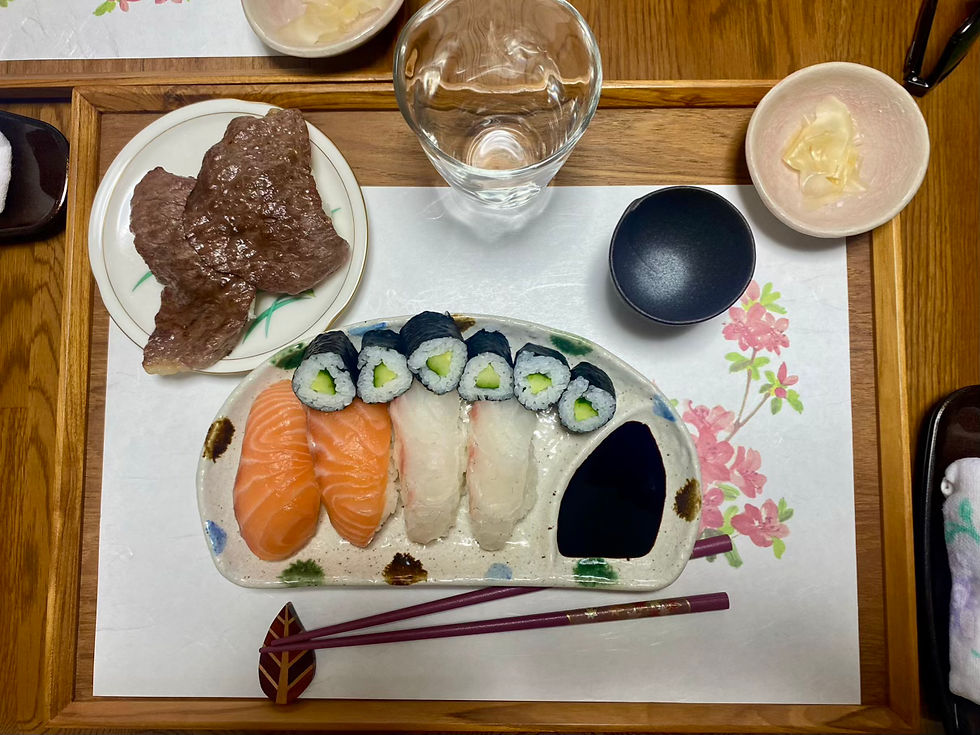
We learned how to prepare salmon and red snapper nigiri, along with simple cucumber maki rolls. Taka explained each step so clearly, from how to slice the fish, to how to shape the vinegared rice, to how to roll the sushi - that the girls were able to follow along easily.
With proper technique, every piece becomes the perfect size for a delicious mouthful!

Alongside the fish, we also made wagyu beef sushi. We order something similar to this at our local sushi restaurant in Canada, but I had no idea it was actually quite common in Japan, especially for home cooking.
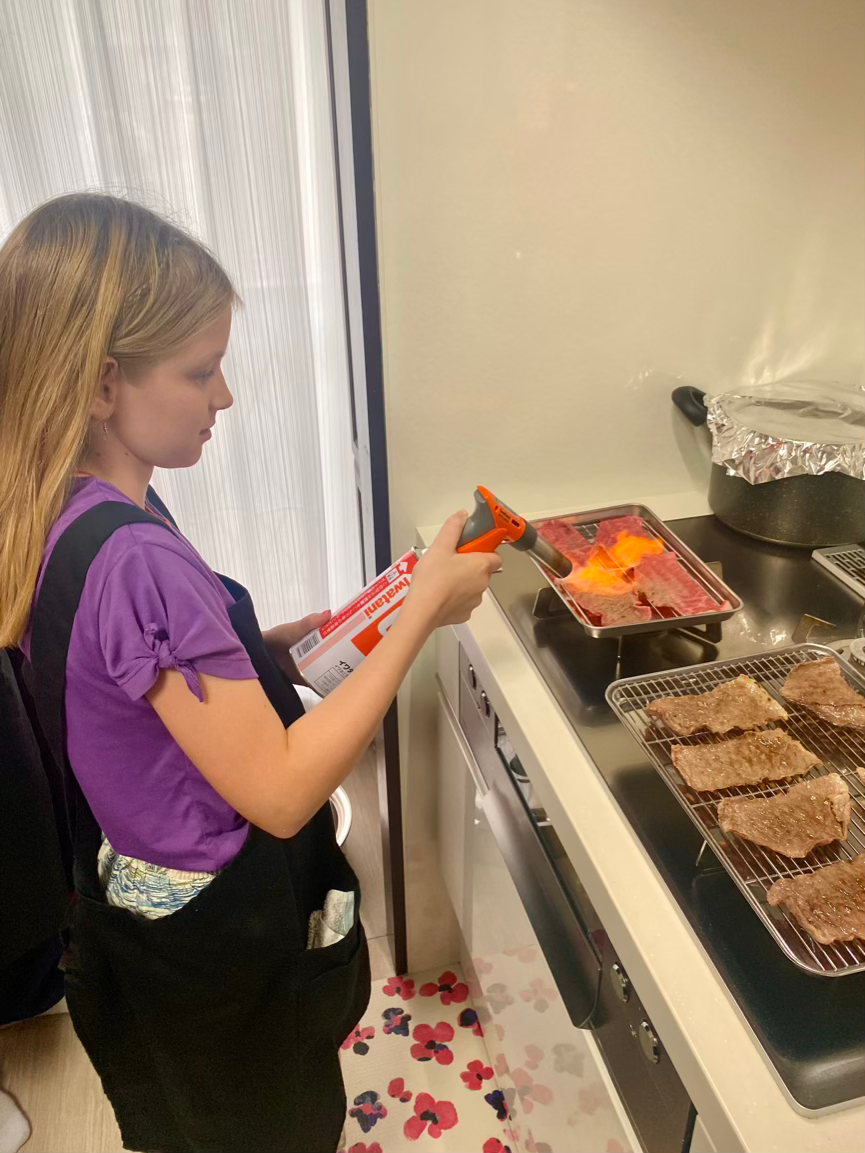
Taka talked us through the process, and then we all took turns searing the small pieces of beef with a blowtorch. The girls’ faces absolutely lit up at the idea of using a blowtorch - let’s just say that part didn’t require any encouragement!
Making Vegetable Tempura
The final part of the cooking experience was to make the vegetable tempura. Keiko had already prepped a beautiful selection of vegetables - mushrooms, squash, asparagus, red pepper and zucchini, and showed us how to make the perfect light tempura batter.
It was refreshing to see so many vegetables, as we’ve found it surprisingly tricky to eat veg in Japan.

This part of the experience varies each time - Taka will rotate making tempura, gyoza, and okonomiyaki depending on the availability of ingredients. If you have a particular preference, you can always email them in advance, and they’ll likely be happy to accommodate.
Sitting Down to Eat Together
Before we began eating, Taka‑san shared a few words, raised a “Kanpai,” and offered everyone a drink. Drinks in Taka’s home are free, which is a refreshing contrast to many similar experiences where everything comes with an extra charge. We were even given the rest of the sake bottle to take home with us as a keep sake, which we ended up drinking during our time in Kyoto!
We enjoyed wonderful conversations with Taka and Keiko about life in Japan, and in return we shared stories about Canada and the adventures ahead on our trip.
It felt like a genuine cultural exchange as we passed our phones around, showing each other photos, it was truly special.
Matcha Tea Ceremony
After we finished eating, Taka introduced us to a traditional matcha tea ceremony and explained the precise etiquette involved.
As we followed each step - turning the cup, offering thanks and compliments, returning it to its original position, and bowing at just the right moment, we were also served some Japanese confectionary to enjoy with the tea.

The sweets are typically made from red beans, and were a bit sweeter than we’re used to, but they were so beautifully made and it was such a thoughtful gesture.
Calligraphy: Writing Our Names in Japanese
We ended with calligraphy, a practice that has always fascinated me because every stroke feels like creating a work of art.
Keiko taught us how to write our names in traditional Japanese script, which we then put into practice ourselves.

Keiko then also wrote each of our names beautifully on thick, high‑quality paper, creating a keepsake that now sits proudly framed on our side table - a lovely reminder of our time with Taka and Keiko.

A Rainy Farewell

After the course had finished, we said our goodbyes and as we were leaving, the skies opened and it started pouring! Without hesitation, Taka handed us umbrellas to borrow and walked us back to the station. It was such a lovely gesture, and it summed up the entire experience: thoughtful, generous, and full of heart.
Even after we left Tokyo, we’ve continued to think about this experience and stay in touch with Taka and Keiko.
Taka sends out a quarterly email to the entire TAKA family, sharing what he’s been up to and inviting everyone to stay in touch.
We wrote back to him, and he replied with a lovely email saying that he admired us for travelling with the girls at such a young age. We later sent him a postcard from New Zealand and told him he’s always welcome to stay with us in Canada.
Practical Booking Information
It’s worth noting that when you book an experience with Taka, it’s always just for your family. Groups are never mixed, which helps keep each experience personal and relaxed.
Here are a practicalities if you are considering booking:
Time: the experience lasts from 10.30 until 3pm.
Meeting place: Taka will meet you at the Central Gate of JR Omori Station. You can’t miss him as he will be holding a bag with the logo of “TAKA" on it.
Price : The price per adult is 14,000 yen. Children aged 7 to 12 cost 9,500 yen. Children under 7 are free.
Capacity : they can only accommodate 5 people in their home.
You can book the Homecoming TAKA experience here.
Hands Down the Best Sushi Making Class in Tokyo!
Our time at Homecoming TAKA was easily the best experience we had in Japan, and it ended up being the top activity we recommend in our 5-day Tokyo itinerary. I can’t speak highly enough about it as it was meaningful, fun, educational, and wonderfully family‑friendly.
If you’re looking for the best sushi making class in Tokyo that works beautifully for kids, Homecoming TAKA is the one we’d recommend without hesitation.
If you'd like to dive deeper into our travels through Japan, we kept a daily diary capturing the small moments that don’t always make it into our 'best of' guides or itineraries, covering everyday life, in all its little details. You can find the full list of entries here.
This class was part of a much bigger 100-day adventure, if you're curious how we planned the whole trip, check out our full RTW planning guide.


Comments