.png)

JAPAN
Japan Travel Guide
Japan was the country we were most excited about before our 100-day sabbatical, and somehow it still managed to exceed our expectations.
We spent five nights in Tokyo and five nights in Kyoto, with a day trip to Nara before our final night in Osaka, and it was easily one of our favourite parts of the trip.
What we loved most was how easily Japan blends old and new. There aren't many places on earth where you can spend the morning exploring a centuries-old temple and the afternoon standing in the middle of a neon-lit district packed with people. The history, the culture, and the food were more than enough to fill 11 unforgettable days.
This guide is your starting point. Use it to find the right itinerary, explore by region, and navigate to our detailed guides so you can build the perfect trip.
Start here if you're planning your first trip to Japan
-
Got two weeks and want to see it all? → Follow our full 2 Week Japan Itinerary for Families and First-Time Visitors, covering Tokyo, Kyoto, Nara, and Osaka
-
Planning a classic Tokyo & Kyoto trip? → Read our Tokyo 5-Day Itinerary and Kyoto 5-Day Itinerary
-
Short on time in Tokyo? → Start with 25 Best Things to Do in Tokyo for Families
-
Want the full Kyoto highlights list? → 25 Must-See Places and Experiences in Kyoto
-
Trying to avoid missing out on tickets? → See our 10 Kid-Focused Things to Book in Advance for Japan
-
Not sure what to eat? → Our kid-friendly food and fun food experience guides have you covered
Featured City Guides
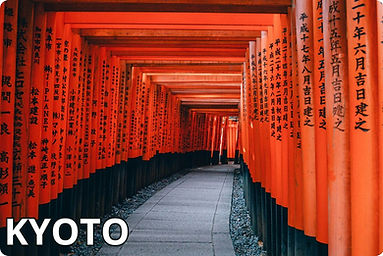
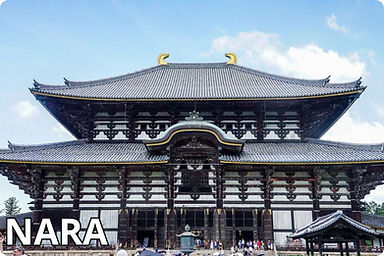
From the neon-lit streets of Tokyo to the ancient temples of Kyoto and the bowing deer of Nara, each region of Japan has its own personality. Pick a spot below to jump straight to it.


Japan Itineraries
Whether you're spending five days in Tokyo, five in Kyoto, or trying to fit both into one trip, these itineraries show exactly how we structured our own time in Japan.


Tokyo
Start with our best-of Tokyo guide, then dig deeper into the experiences we loved the most.


Kyoto
A full look at everything we covered in Kyoto, including our favourite temple in Japan.


Nara
Bowing deer, one of the largest wooden buildings in the world, Nara makes for a great day trip and was one of our favourite days of the whole trip.
Japan Travel Planning FAQ
These are the exact questions we found ourselves asking while planning our own trip to Japan. Hopefully they save you some of the same research.
Money & Payments
Should I use cash or credit cards in Japan? Cards are accepted more widely than Japan's cashless reputation might suggest, but plenty of smaller restaurants, temples, and local shops can still be cash-only. Carry some yen, but you won't need as much as you might expect.
How easy is it to find ATMs in Japan? Very easy, they're everywhere, though not all of them accept foreign cards. 7-Eleven ATMs are the safest bet, they're reliable, available nationwide, and work well with foreign cards, even in smaller towns.
Do I need cash for convenience stores in Japan? No, convenience stores (konbini) almost always accept cards and IC cards alongside cash.
Is tipping expected in Japan? No, tipping isn't part of Japanese culture and can even come across as confusing or rude.
Getting Around
Do I need a Japan Rail Pass? It depends on how much intercity travel you plan on doing. If you're mostly staying within one city, an IC card (see below) is the better option. The JR Pass starts making sense once you're taking multiple long-distance Shinkansen trips. If you're not sure either way, JRPass.com's fare calculator is a useful resource to check for your own route.
Do I need a Suica or Pasmo card in Japan? No, but a Suica or Pasmo card makes getting around Japan much easier. These rechargeable transit cards work on most trains, subways, and buses, and can also be used at convenience stores, vending machines, and many retailers. They're available in both digital and physical formats.
Can I use Suica or Pasmo on my phone? Both have apps available for mobile, and you can load one straight onto your phone, which makes reloading easy. Kids can't be added to an adult's app account though, so unless they have their own phone, you'll need to get them a physical card instead, we picked ours up for the girls at the airport.
What's the best way to travel between Tokyo, Kyoto and Osaka? The Shinkansen. It's fast, frequent, and comfortable, Tokyo to Kyoto takes around 2 hours 15 minutes.
Do I need to book the Shinkansen in advance? Not necessarily. We bought our tickets the day before we travelled without any issues. However, booking ahead guarantees a reserved seat and lets you choose exactly where you sit, which can matter more than you'd think (see below).
Which side has the Mount Fuji view travelling from Tokyo to Kyoto? The right side of the train, window seat E. The view appears for a few minutes around Shin-Fuji Station, roughly 40 minutes after leaving Tokyo, so keep your camera ready.
Are there lockers at train stations, and how do they work? Yes, most stations have coin lockers of varying sizes. You can pay in cash or sometimes IC card, and keep your ticket or code to retrieve your bag later. We used them to store our luggage during a day trip to Nara and found the process straightforward.
Is luggage forwarding worth using in Japan? If you're moving between cities and don't want to haul suitcases through train stations, yes. Japan's luggage forwarding services, such as Yamato Transport, are remarkably efficient and can deliver your bags to your next hotel, often overnight and for less than you'd expect.
Can I bring a stroller on Japanese trains and subways? Yes, though bigger stations can involve a lot of walking and stairs, so factor in extra time if you're navigating with one.
What's the best taxi app to use in Japan? We'd recommend the GO Taxi app. It's widely used across Japan, covers most major taxi companies, provides upfront fare estimates, and lets you pay directly through the app. We found it easy to use, even without speaking Japanese.
Does Uber work in Japan?
Yes, but its coverage is limited compared to the GO Taxi app. In many areas, Uber simply connects you to local taxis anyway, so we found GO to be the more reliable option.
Connectivity & Language
Do I need an eSIM, physical SIM, or pocket Wi-Fi in Japan? An eSIM is the easiest option if your phone supports it, as you get data as soon as you land. We used Airalo and it worked great throughout the trip.
Is Japan easy to travel around without speaking Japanese? Yes. Signage is generally in Japanese and English, and Google Maps does most of the heavy lifting, walking directions, train platforms, fares, and even which station exit to use.
Is Google Translate useful in Japan? 1000% yes! Especially the camera feature, which translates menus and signs in real time just by pointing your phone at them. It's not perfect, but invaluable when navigating day-to-day travel in Japan.
Practical Basics
What type of plug adapter do I need for Japan? Type A or Type B, the same two-flat-pin style used in North America. If you're travelling from a country with a different plug type (most of Europe, the UK, Australia), you'll need an adapter.
Do I need to carry my passport with me in Japan? Yes, foreign visitors are required to carry ID, although in practice we were never asked to show it.
Can I drink tap water in Japan? Yes, tap water is safe to drink throughout Japan.
Is it true there are very few public trash bins in Japan? Yes. Public trash bins can be surprisingly scarce, so it's best to carry your rubbish with you until you find a bin at a train station, convenience store, or your hotel.
Etiquette & Culture
What are goshuin and eki stamps? A goshuin is a hand-stamped seal you can collect at temples and shrines, and eki stamps are similar but found at train stations. Read our Goshuin/Eki Stamp guide for more info.
What are the basic etiquette rules visitors should know in Japan? Queue and wait your turn to board trains, keep phone calls quiet on public transport, and don't eat while walking through busy streets (more on that below).
Do I need to take my shoes off everywhere, or just certain places? Just certain places, most temples, some restaurants, and any traditional accommodation. Look for a shoe rack or a step up at the entrance as your cue.
Can I eat while walking in Japan? It's generally considered poor etiquette, even for street food. Most vendors expect you to eat near the stall rather than walk off with it.
Is there a dress code for visiting temples and shrines? Not really. We saw plenty of people in shorts, short skirts, and casual clothing. Just use common sense and be respectful, especially at more traditional or less touristy sites.
Planning & Booking
Do I need reservations for restaurants in Japan? Not usually. Most restaurants are walk-in friendly, but reservations are worth making iif you know exactly when you want to arrive. We turned up at Happy Pancake in Kyoto without a reservation and there was a two-hour wait!
What should I book in advance for Japan? Some experiences like the Nintendo Museum, TeamLab Planets and Shibuya Sky sell out weeks or months ahead, we've put together a full guide to what's worth booking early.
What should we eat in Japan with kids? We've written two guides on this, one covering kid-friendly food in Japan, and another on unique food experiences for kids.


Key Resources
A few official links and tools worth bookmarking before you go:
-
Tokyo Subway Map — official route map, downloadable for offline use
-
Suica & Pasmo Info — how to get an IC card and where it works
-
Japan Rail Pass Guide — official JNTO breakdown of pricing and eligibility
-
Yamato Transport — the luggage forwarding service mentioned above
-
Airalo — the eSIM provider we used ourselves
-
Visa Info for Canadians — official Government of Canada travel advisory (90-day visa-free entry)
-
JR Pass Fare Calculator — compares regular ticket prices against the JR Pass for your specific route
-
Cherry Blossom Forecast — handy if you're timing a trip around sakura season
Hotel Recommendations
These are the hotels we stayed at during our trip and would confidently recommend to other travellers.


Didn't find what you're looking for? Browse our full 100-day diary for more stories from our time in Japan.