.png)
Daigo-ji Temple, Kyoto: Why This Quiet UNESCO Site Might Be Our Favourite Temple in Japan

Updated: Sep 3
If you only have time for a handful of temples in Kyoto, most lists will point you toward Kiyomizu-dera, Kinkaku-ji, or Fushimi Inari. They're all worth the hype, but after several increasingly crowded days of temple-hopping, Daigo-ji ended up being the one that stuck with us the most.

We visited on a quieter, half-day morning built into our 5-day Kyoto itinerary. We'd gone back and forth on whether the extra travel time was worth it - turns out, it ended up being our favourite temple from our entire time in Japan.
In this guide, we'll cover everything you need to plan your own visit - how to get there, what to expect, and why we think it deserves a spot on your Kyoto itinerary, even though it rarely makes the "top 5" lists.
If you'd like to read about what other attractions we recommend visiting in Kyoto, see our full guide for the rest of what we'd recommend.
This post may contain affiliate links. If you click through and make a purchase, I may earn a small commission at no extra cost to you. We only ever share honest reviews of products and experiences we genuinely love.
Why Visit Daigo-ji Temple in Kyoto

Daigo-ji is a working Buddhist temple complex in southeastern Kyoto, and it's a UNESCO World Heritage Site in its own right, so we found it a little surprising just how quiet it was.
We'd spent the previous few days fighting crowds at Kinkaku-ji and Fushimi Inari, so arriving at Daigo-ji and genuinely being able to count the other visitors on two hands felt like a much more relaxing experience.
We even spotted monks going about their day on the grounds, which was a nice reminder that this is still a living, active temple and not just a tourist stop.
Lonely Planet's own guide calls Daigo-ji "not a high priority destination" outside cherry blossom season, unless you happen to enjoy hiking. We'd push back on that.
Even without a single cherry blossom in sight, the scale of the grounds, the history, and the sheer breathing room compared to Kyoto's more famous temples made it one of our best mornings in the whole city.
If you're travelling with kids, it's an easy temple to get around. Large open spaces and flat paths connecting the halls, gardens, and pagoda make it a relaxed, low-stress place to explore as a family
The complex is also enormous, it spans roughly 6.6 million square metres across Mount Daigo and includes more than 80 buildings in total, so there's plenty of room to spread out even if a school group or two showed up.
A Brief History of Daigo-ji
Daigo-ji was also one of the more interesting temples to explore from a historical perspective, and we felt like we actually had the time and space to stop, read the information boards, and learn about the site's long history.
The temple was founded in 874 by a monk, who according to temple tradition climbed Mount Daigo and discovered a spring of pure water at the summit, which he considered a sign of the site's spiritual significance.
💡 Did you know? The temple's name is actually a Buddhist metaphor. In a traditional five-stage process of refining milk into ghee, "daigo" refers to the final, most refined stage, used figuratively to describe the highest, most profound stage of Buddha's teaching. That's where the temple gets its name.
That mountaintop area became known as Kami-Daigo, and the temple gradually expanded down the mountainside into what's now called Shimo-Daigo, home to the main halls most visitors explore today.
The temple is also famous for Hideyoshi's Cherry Blossom Viewing Party in 1598, when the powerful warlord Toyotomi Hideyoshi had the gardens at Sanbō-in redesigned for an extravagant hanami celebration. Those beautifully maintained gardens are still among the temple's main highlights.
The temple complex has survived multiple fires and conflicts over its 1,100+ year history, but remarkably, the five-storied pagoda has stood untouched since 951 AD, making it the oldest surviving wooden structure in Kyoto.
How to Get to Daigo-ji Temple
Daigo-ji is located a little further out from central Kyoto than most of the city's famous temples, which is very likely part of why it stays so much quieter.
By subway: Take the Tōzai subway line to Daigo Station, then walk about 10-15 minutes to the temple entrance.
By bus: Several bus routes connect Kyoto Station and Yamashina Station directly to Daigo-ji, though depending on traffic, the journey can take longer than the subway option. We took the bus from our hotel in Higashiyama, and it took around 40 minutes, but it gave us a fascinating insight into parts of Kyoto we otherwise wouldn't have seen.
Either way, budget a little extra travel time compared to Kyoto's more central temples, it's part of the trade-off for a noticeably quieter experience.
Whichever way you go, wear comfortable shoes - the grounds are large, and between the halls, gardens, and pagoda, you'll cover a lot more ground than the walk from the station alone suggests.
Sanbō-in Temple & Gardens

Sanbō-in is the sub-temple most closely tied to the famous 1598 cherry blossom party, and the garden that was commissioned for the occasion is still the centrepiece of a visit here.

What we loved most about Sanbō-in is that, unlike many temples in Kyoto where you can only view the interior rooms from a walkway, you're actually allowed to step inside and sit on the tatami mats, with the garden framed perfectly through the open doorways.
It gave us a real sense of what it might have felt like to sit in that same room centuries ago, and it was such a lovely moment watching the girls quietly sit and take it all in.
The Five-Storied Pagoda
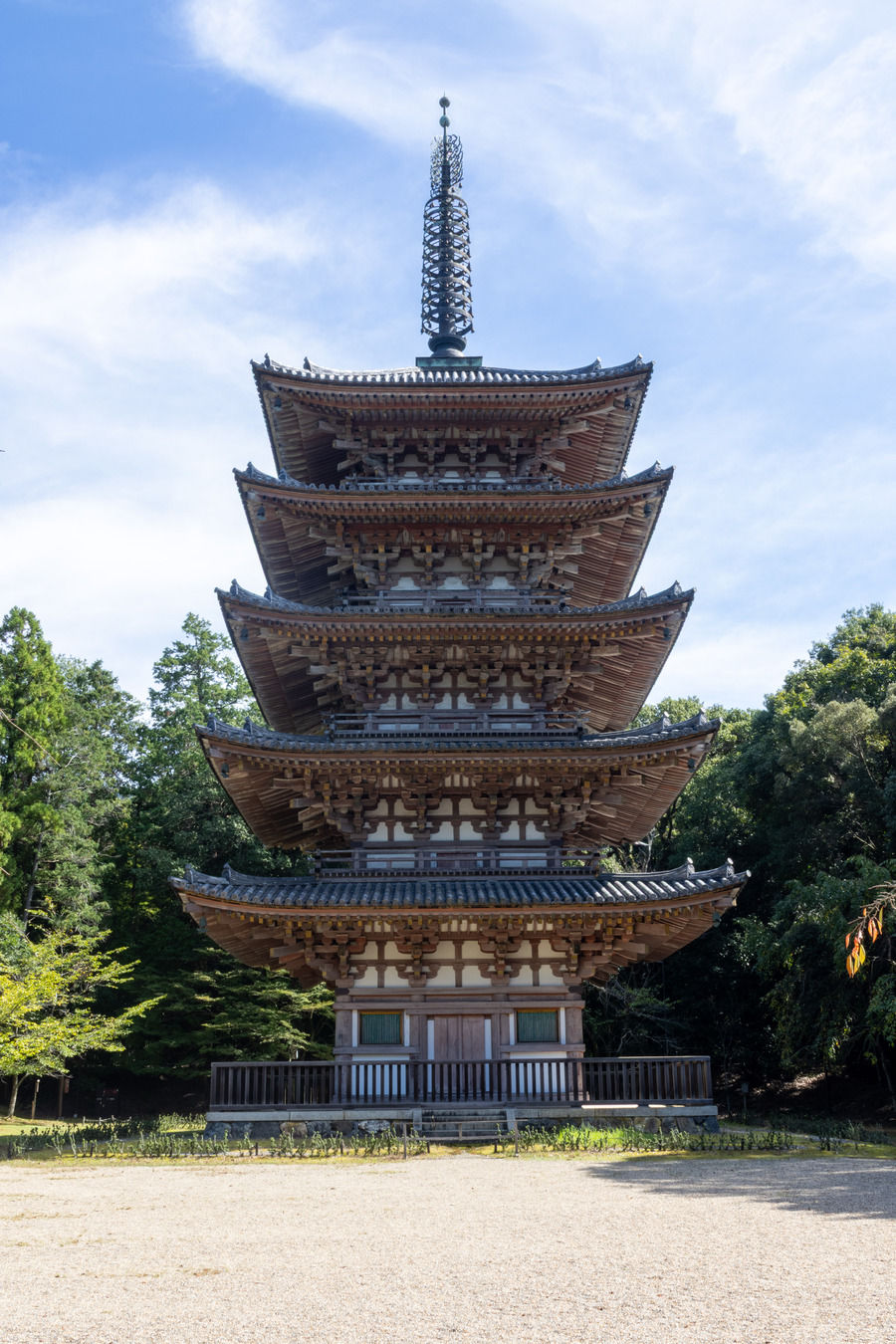
A short walk further into the complex brings you to Daigo-ji's five-storied pagoda, which was completed in 951 AD and is remarkably still the original structure.
The pagoda stands at around 38 metres tall, and is officially recognised as the oldest wooden building in Kyoto, having survived numerous historical fires and conflicts that destroyed much of the rest of the city's older architecture over the centuries.
We found it almost unbelievable that something so old, and built entirely of wood, could still be standing in such excellent condition more than 1,000 years later.
As someone that has a huge interest in traditional woodworking techniques, I spent a long time just slowly walking around the pagoda to appreciate the craftsmanship up close.
The Reihōkan (Treasure Hall)
Just across from Sanbō-in sits the Reihōkan, Daigo-ji's own treasure museum, first opened in 1935.
It houses an enormous collection of Buddhist art and artifacts, over 100,000 pieces in total, including sculptures, paintings, sutras, and centuries-old documents, with more than 75,000 of them classified as National Treasures or Important Cultural Properties.
The museum only opens for special exhibitions in spring and autumn rather than year-round, so it's worth checking current dates before building it into your visit. Even from the outside, it's worth a quick look, there's a roughly 200-year-old weeping cherry tree standing in front of the hall that's become something of a minor attraction in its own right.
Photographs are not permitted.
Benten-dō Pond

Our favourite corner of Daigo-ji was Benten-dō, a small temple building set beside a quiet pond, crossed by a bright red bridge and home to plenty of koi.
It's a simple, understated spot compared to the pagoda or Sanbō-in, but it's undoubtedly the most photogenic corner of the entire complex.

When we visited, we had the whole area entirely to ourselves, and we sat for a while just taking it in. There are some nice benches where you can just look out over the famous red bridge and watch the koi swimming in front of you - it was wonderful.
If you happen to visit Benten-dō in autumn, you're unlikely to have it all to yourself like we did. It's one of the area's most popular spots for autumn foliage, when the maple trees around the pond turn brilliant shades of red and orange, something we'd love to come back and see for ourselves one day.
Kami-Daigo (Upper Mountain Area)
We didn't make it up to Kami-Daigo, the upper section of the temple complex on Mount Daigo, as it adds a fairly demanding uphill hike of around an hour each way. With young kids, a tight itinerary, and the incredible heat, it just wasn't on the cards this time.
If you do have the time and energy, though, it sounds like a worthwhile extension. Kami-Daigo has its own historic halls, including the temple's original site. Just be aware it has separate, more limited opening hours, so check before you commit to the extra climb.
Admission, Hours & Practical Tips
Hours: Daigo-ji is open daily from 9:00 am to 5:00 pm (closing slightly earlier, around 4:30 pm, from December through February). Last entry is typically 30 minutes before closing.
Admission: Standard entry runs around 800 yen per adult, with an additional 500 yen if you want access to the inside garden areas like Sanbō-in's interior. Pricing increases further during cherry blossom season (late March-early May) and autumn foliage season (mid-October to early December), when the museum's special exhibitions are also open. Kids enter free.
Kami-Daigo access requires an additional admission fee if you plan to make the climb.
Accessibility: the main grounds and museum are wheelchair accessible, though some areas of the temple have steps, and accessible toilets are available on site.
The main hall's Buddha statue is a hibutsu, a hidden Buddha never shown to the public, so don't expect to actually see it even inside the Kondo Main Hall.
Crowds: Even during a fairly busy week of sightseeing elsewhere in Kyoto, Daigo-ji stayed noticeably quiet. That said, cherry blossom season draws bigger crowds here too, given the temple's historical reputation as one of Kyoto's best sakura spots, so if peaceful solitude is your main goal, a visit outside peak bloom is worth considering.
Getting a goshuin: Daigo-ji offers several different goshuin across its grounds (at the main temple compound, Sanbō-in, and the treasure hall), so if you're collecting them, budget a little extra time.
We've written a full guide to how goshuin work if you're new to collecting them.

Final Thoughts
We've visited a lot of incredible temples in Japan, but Daigo-ji is the one we keep coming back to when people ask us what surprised us most about Kyoto. It has the history, the architecture, and the scale to rival any of the city's headline sights, just without the crowds.
If your Japan itinerary has any flexibility, we'd genuinely recommend carving out a half-day for Daigo-ji, especially if you're travelling with kids and want a break from shuffling through packed courtyards.
And if you want to make a full day of it, the immediate area around Daigo-ji is also home to several smaller, lesser-visited temples, Zuishin-in, Kaju-ji, Hokaiji, Iwayaji, and Sekihoji, that almost nobody combines with a Daigo-ji visit despite being right on the doorstep.
For the full context of how we fit this into a longer trip, take a look at our 5-day Kyoto itinerary or our daily diary entry from that day for the rest of the story (including the best pancakes of the trip).
We're a Calgary-based family that travelled for 100 days, documenting each step so other families can get an honest, real-life look at long-term travel with kids.
You can browse the full 100-day daily diary contents list here.


Comments