.png)
Parks Canada Camping Reservations: Proven Tips to Beat the Queue & Book Your Campsite


If you’ve ever tried to book a campground in Banff or Jasper, you already know that release day is a whole thing. The demand is huge, the system moves fast, and every year it feels a little harder to secure the site you want because demand far outweighs supply.
Unfortunately, this seems to be the new normal.
Having extensively travelled across Canada and having lived in Calgary near the Canadian Rockies for almost 15 years, we’ve been through this reservation process more times than I can count.
There’s no magic bullet that bumps you to the top of the queue. In fact, this year we ended up 14,251st in line, and in previous years we’ve even found ourselves somewhere in the 40,000s.
That said, while you might not always get the exact site you’re hoping for, a bit of strategy, planning, and flexibility can go a long way. Even in our worst queue years, we’ve always managed to come away with something we were excited about.
This post will walk you through the practical, proven tips that consistently improve your odds, and hopefully help you secure the campsite you’re after.
In this guide, we’ll cover:
Ready for Parks Canada camping reservations tips? Let’s dive in.
What You Can Book Through Parks Canada

Before release day arrives, it helps to understand the different types of experiences you can book through the Parks Canada camping reservation system.
It’s important to remember that this is a Canada‑wide booking system. Whether you’re looking for a camping site in Banff National Park in Alberta or an oTENTik in Cape Breton Highlands National Park in Nova Scotia, the reservation platform is the same.
Here is an explanation of the different types of reservations that you can book through the Parks Canada system:
Frontcountry Camping

Frontcountry camping is what most people think of when they picture a traditional Parks Canada camping trip. These sites are easily accessible by vehicle and are located in established campgrounds with clear roads, numbered sites, and varying levels of amenities.
Depending on the campground, you can expect anything from basic unserviced tent sites to fully serviced RV sites with power, water, and sometimes sewer. These campgrounds usually include washrooms, showers, fire pits, and other family‑friendly facilities.
Parks Canada Accommodations
Not many people know this, but Parks Canada offers a whole lineup of ready‑to‑stay accommodations. These include oTENTiks (a hybrid between a cabin and a tent), cabins, yurts, tipis, MicrOcubes, and even trapper tents, and they are located across Canada.

All of these are fully assembled structures that provide beds and basic furnishings, and they’re designed so you don’t need to bring your own tent or set anything up yourself.
They’re especially great for travellers visiting the area on vacation who don’t have their own camping gear but still want the national park experience.
Unfortunately, these get snapped up incredibly fast in places like Banff and Jasper because they’re comfortable, family‑friendly, and require no setup, so they’re usually the first options to disappear as soon as the system opens.
Backcountry Camping
Backcountry camping spots are available in most national parks and are great for hikers, paddlers, or anyone who wants a more remote and adventurous experience.
These sites are not accessible by vehicle, and they can only be reached by hiking, paddling, or sometimes biking.
Backcountry campsites are smaller, more rugged, and usually equipped with only the bare essentials. You need to follow Leave No Trace principles, stay bear‑aware at all times, and be comfortable with route‑finding, as you can often be hours away from services
It’s also important to carry proper hiking essentials, including navigation tools, extra layers, enough food and water, and a well‑stocked first aid kit, as you’re entirely responsible for your own safety in these remote areas.
Backcountry bookings can also include specific multi-day trails or routes, such as the West Coast Trail which require additional consideration when booking.
Day Use and Special Activities
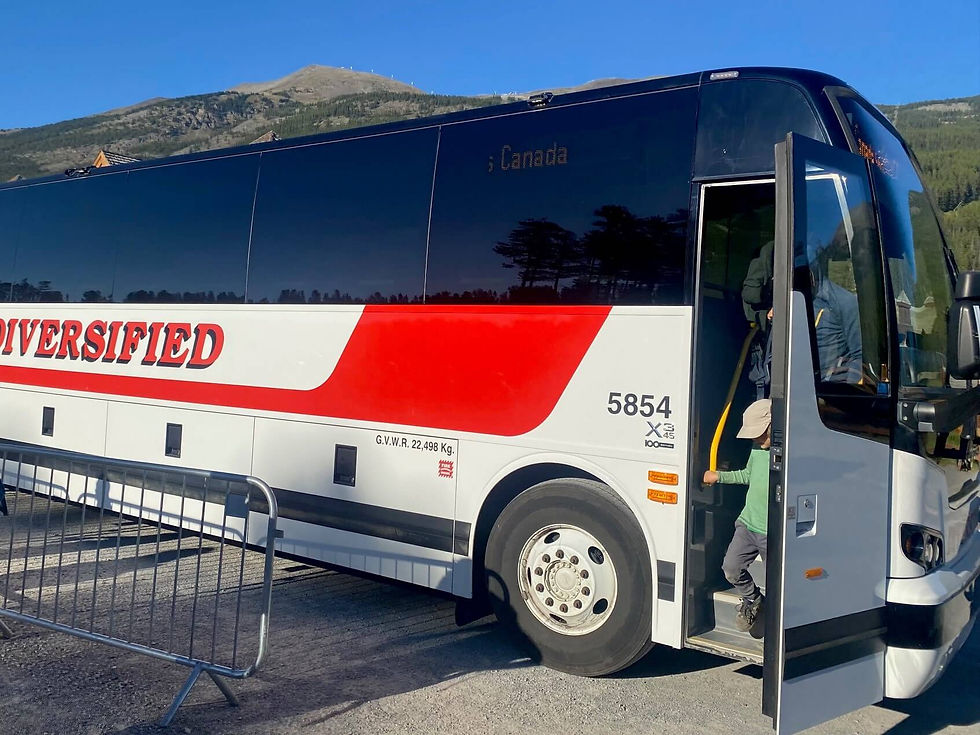
Parks Canada also uses the reservation system for popular day‑use experiences, tours, and transportation services.
One of the most popular uses in Alberta is booking the shuttles to Lake Louise and Moraine Lake in Banff, as well as entering the coveted lottery for the Lake O’Hara day‑use bus in Yoho. These systems help manage visitor numbers in some of the busiest and most fragile alpine areas.
Beyond transportation, the reservation system also handles things like guided hikes, learn‑to programs, fishing permits, and day‑use access for experiences such as the DayTripper boat service in Georgian Bay Islands National Park.
How the Parks Canada Camping Reservations System Works
Before getting into the specifics of what to do on launch day, we highly recommend taking the time to get yourself set up and familiar with how the system works ahead of time.
That way, when booking opens, you can hit the ground running and focus on securing your spot rather than trying to learn the system on the fly.
Most people booking a campsite fall into one of two categories.
The first group is driven entirely by dates - for example, people who must travel on certain days, need a long weekend, or are visiting from out of town with fixed vacation time. The second group is driven by location - people who have a specific campground in mind but are flexible about when they go.
Here are step by step instructions for each booking preference.
Finding Availability for Specific Dates (Flexible Location)

From the main camping reservation page, choose the type of site you’re looking for. In this example, we’re booking Parks Canada Accommodations. I’m firm on the dates (11 to 12 August) but I’m open to any location, so I’ve left the park set to All Locations. Once everything is selected, press Search.

You’ll start by seeing the Canada‑wide map view by default. From here, you can click the little green dot into Western, Central, or Eastern Canada depending on where you want to go.

The legend is easy to understand, but in short, if your dates are fixed, you’ll only want to click on anything that shows up in green, as this indicates availability for your exact dates.
Orange means there is availability, but on different days than the ones you selected.
Purple can work if you’re flexible, as it usually means partial availability, i.e. you might be able to stay four nights instead of the five you originally wanted.

From this point, I prefer to switch to List View because it’s much easier to see what’s actually available. In this example, there is availability in Kluane, Mount Revelstoke, and Rocky Mountain House.

Click on the option you’d like to explore - in this case, I selected Kluane. When I click through again, it shows me the available options in Kathleen Lake.


This is where you’ll see all the available options for the site you’re interested in booking. If you click on the details arrow, it will open up more information about that option, and you’ll also be able to view the availability calendar or proceed directly to reserve.


Book A specific Location with Flexible Dates
When your search is focused on a specific location rather than a specific date, the process is very similar to the steps above, however I prefer using the map view to drill down into the exact area I’m interested in.
In this example, I want to book a site at Two Jack Main in Banff, but I’m flexible on dates. The system does require you to enter a date to begin the search, but it doesn’t matter at this stage whether your chosen date actually has availability. Just select any one‑night stay to get started, and you can adjust the dates once you’re inside the availability calendar.
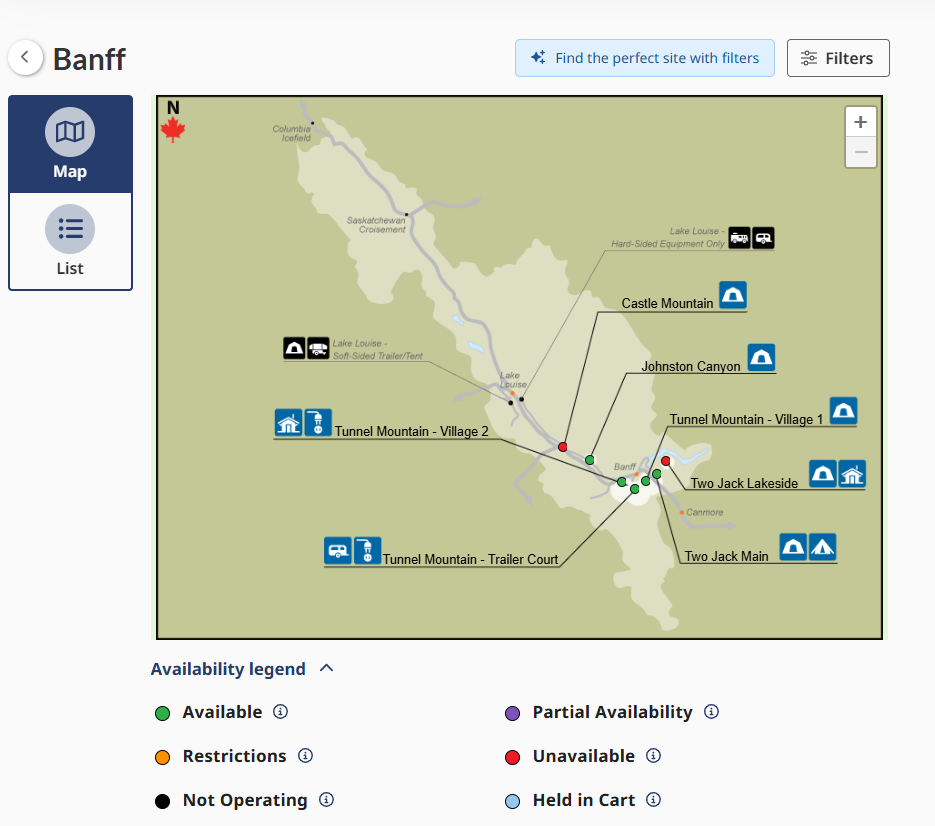
From here, I click on any of the dots for the campground I’m interested in. Unlike when dates are the driving factor, you can select green and orange here as well, since you’re flexible on timing. Red, however, means there is no availability on any dates, so those options can be skipped.

Keep drilling down by clicking on the dots for the site you are interested in. In this case, for my selected loop there is only one campsite available. If that date works for you, go ahead and book it. If it does not, you can click on the Calendar tab on the left to view more availability.

The availability screen will look something like this, and it is very helpful because it shows you all the campgrounds and their availability within that loop. While this example is for frontcountry camping, the system works the same way for Parks Canada Accommodations and backcountry camping as well.

Create a Parks Canada Reservation Account
Checking out is relatively straightforward, but only if you’re prepared and know what to expect.
While it is technically possible to book without an account and set one up during the checkout process, that’s the last thing I’d want to be dealing with when I’m trying to secure a coveted spot, as you only have 20 minutes to complete checkout before losing your booking.
Take a few minutes to get your account set up beforehand. You can even sign in with your Google account, which makes it extremely quick and easy.
Parks Canada has created a helpful video walking through all the steps here.
Parks Canada Camping Launch Dates Explained
Parks Canada opens reservations once a year, usually toward the end of January or early February, but the dates are staggered by location. This means each national park has its own specific launch day and time, rather than everything opening at once.

This rolling release schedule helps distribute demand - although try telling that to someone trying to secure a lakeside spot at Two Jack Lakeside campground in August!
Parks Canada publishes the full list of launch dates on its website, and it’s the best place to confirm the exact day for the campground or experience you want.
You can find the full schedule on the official reservation page.
What to Expect on Launch Day
On launch day, the reservation system works a little differently than usual, and it helps to know what to expect before things open.
About thirty minutes before the booking time, everyone who visits the website is placed into a waiting room. This page simply holds you there until the system is ready.
Most reservation launches happen at 8 am in the time zone of the location you are booking, but it is always best to double‑check the exact time on the official Parks Canada page. The waiting room message will also show a countdown at the bottom, so you can clearly see how long it is until the booking system opens.

When the clock hits the exact launch time, the page will refresh on its own and every user will be assigned a random position in the queue. Your place in line is not influenced by how long you were waiting beforehand, so getting to the waiting room early does not give you a better number.
Once you see your queue position, it is important not to refresh the page, as that can cause issues or send you to the back of the line.

Anyone who arrives after the launch time will automatically be placed at the end of the queue, so it is always best to be in the waiting room before things open.
When your turn finally comes up, a pop‑up will appear to let you know that the system is about to move you forward. After a short moment, the page will refresh again and bring you into the booking system.
Reminder: Do not refresh the page at any point, as you will lose your spot.
Once the system opens your session, you will land on the booking page and things start moving quickly. This is where all the preparation you did earlier really pays off.
You can begin choosing your campsite or accommodation right away. If your first choice is not available, move directly to your plan B or plan C rather than starting over.
As soon as you add a site to your basket, the system starts a twenty-minute countdown, which gives you a limited window to complete your reservation. This is why we strongly recommend setting up a Parks Canada account ahead of time. Trying to create an account within that twenty-minute window adds unnecessary stress.

Once you have completed the payment, you will receive two emails. One is the reservation confirmation and the other is the payment confirmation. Both include important details about your booking, so take the time to read them carefully well before your arrival date.
Tips to Increase Your Chances of Getting the Campsite You Want
So, you have read everything above and you hopefully now have a good understanding of what the process looks like and how launch day works. But what happens if you end up in 23,456th position in the queue?
While nothing is foolproof, there are still several simple and effective strategies that can significantly boost your chances of getting the campsite you want.
Here are a few suggestions:
Set realistic expectations. Some campsites are always the first to disappear, and they can sell out within minutes. Hoping to secure a three‑night long‑weekend stay at somewhere like Two Jack Lakeside is, for most people, simply not realistic. You might get lucky, but the odds are not in your favour.
Practise makes perfect. We mentioned this above, but it is worth repeating. Getting comfortable with the reservation flow ahead of time helps ensure nothing feels new or confusing when the pressure is on. Being familiar with the layout and the steps is one of the best ways to improve your chances of securing a competitive site.
Have a clear Plan B (and C). Before launch day, create a priority list of dates, campgrounds and site types that would work for you. When availability disappears for your first choice, being able to move quickly to the next option gives you a much better chance of securing something, rather than scrambling in the moment.
Use multiple devices. Once launch day begins, remember that the waiting room system treats each device separately, even if they are all on the same internet connection. This means you can log in from several devices, and each one will receive its own queue number. In our household, we used three phones, two laptops and an iPad to give ourselves the best chance of landing a low spot in the queue.
Coordinate with friends and family. If you are camping with friends or another family, it is worth having everyone log in on their own devices. The more people trying, the better the odds that someone gets a favourable place in line.
Have faith. Availability can change a lot within the first hour of the system opening. Many people hold sites in their cart within the twenty-minute timeslot and then release them if they change their plans, run out of time or someone else in their group secures a reservation. Keep trying, and even check back throughout the day, as new openings do appear.
Create your Parks Canada account ahead of time. We mentioned this earlier, but it cannot be said enough. The last thing you want is to be setting up an account while you have Two Jack tickets sitting in your basket! On a similar note, make sure your wallet or credit card is close by. I have been caught out by this before, and it is not an enjoyable feeling when the countdown is ticking.
What to Do If You Don’t Get a Site
Not getting a site on launch day can be frustrating, but all is not lost. Spaces do open up after the rush, and availability often looks better as plans change and people start adjusting their bookings. There is still plenty of hope if you are willing to keep an eye on things.
If you have your heart set on certain dates or a specific campground, the best approach is to check back regularly. The pace is frantic in the first hour, then it settles, and that is when spots can quietly reappear. If you see something that fits, be ready to move quickly.
Parks Canada Notify Me Function
For frontcountry and Parks Canada Accommodation reservations, make use of Parks Canada’s built‑in availability notifications.

You can set alerts that match your criteria and receive an email as soon as a site becomes available. You will get a notification like the one shown below. You can create as many of these notifications as you need.

The only limitation is that the system requires you to choose specific dates and a specific campsite, which makes it less useful for people who are flexible on timing but want a particular location. Even so, it is free, quick to set up, and it saves you from constantly checking the site yourself.
CampNab
For backcountry reservations, Parks Canada does not currently offer the same notification feature. It is possible to third‑party tools like CampNab to monitor for cancellations and send you a text or email when something matches your search, however it is a paid tool, so you will have to decide if it is worth it for you.
Final Thoughts

Camping is super fun, and it’s one of the most affordable ways to spend quality family time outdoors. When you come prepared, stay flexible, and use our helpful strategies, you’ll still be able to find some great spots. And even if you don’t get your first choice right away, openings often pop up as other campers adjust their plans.
Camping in the Canadian Rockies? Read these articles next:
Some of our post popular Calgary content (we live here after all):
Some of our post popular Canadian Rockies content:
Finally, we’re a family who recently travelled the world for 100 days with our kids. If you’d like to take inspiration from our adventure and perhaps start planning your own, you can explore all of our daily diary entries here, along with our destinations page to see everywhere else we’ve travelled.


Comments