
Cu Chi Tunnels: How to Visit From Ho Chi Minh City (Tours, Tickets and Tips for Families)

The Cu Chi Tunnels are a vast network of wartime tunnels about 70 km northwest of Ho Chi Minh City, and they're one of the best history lessons you can give kids in Vietnam.
When we set off on our 100-day family sabbatical, one of our biggest goals was to expose the girls to different ways of learning beyond the classroom.
The Cu Chi Tunnels ended up being one of the best worldschooling days of the entire trip. More than a year later, the girls still talk about the heat, the smell, and the darkness of the tunnels.

The Cu Chi Tunnels are one of the most visited attractions near Ho Chi Minh City, and for good reason. They're also one of the tours you'll be offered most often while you're in the city.
We visited as a family during our travels through Vietnam and came away feeling it was one of the most impactful experiences of our trip.
If you're wondering whether it's worth visiting with kids, whether to choose Ben Duoc or Ben Dinh, or whether you're better off travelling independently or joining a tour, we'll walk you through everything you need to know.
In this guide, I'll cover:
Know Before You Go
Location: Cu Chi District, about 70 km (around 2 hours) from central Ho Chi Minh City to Ben Duoc
Entrance fee: 135,000 VND (about $7 CAD) per adult, including a guide
Opening hours: Roughly 7:30 am to 5 pm, daily (check before you go)
Payment: Cash only at the ticket office
Best time to visit: The dry season (December to April), first thing in the morning
Time needed: Allow a full day, including around 4 hours in the car there and back
Facilities: Toilets, a restaurant, a snack stand and a gift shop
Getting there: A tour, or a Grab if you prefer to travel independently
The challenge: The tunnels are hot, stuffy, dark and tight
Not for: Anyone claustrophobic, or kids upset by war history
Visiting Ho Chi Minh City? See our review of the Vinpearl Landmark 81, where we stayed, and our guide to the best food in Vietnam.
This post may contain affiliate links. If you click through and make a purchase, I may earn a small commission at no extra cost to you. We only ever share honest reviews of products and experiences we genuinely love.
What Are the Cu Chi Tunnels?

The Cu Chi Tunnels are an underground network that Vietnamese fighters dug by hand, first against the French and then during the Vietnam War.
They're famous for how they were used against American forces: people lived, cooked, treated the wounded and planned attacks underground, then disappeared through hidden trapdoors.
They weren't just tunnels. Parts of the network functioned like underground villages, with living areas, kitchens, medical stations and even schools where children continued their education despite the war above ground.

The tunnels sat in an area known as the Iron Triangle, a stronghold just outside Saigon (now Ho Chi Minh City), and were used as a base for attacks on the city. One section even ran underneath an American army base at Cu Chi.
The tunnels survived repeated attempts to destroy them and remained in use until the end of the war in 1975.
Our guide told us that at its peak the network ran for around 250 km and was often built three levels deep. Seeing the scale of it all, it's easier to understand how American forces struggled to combat an enemy that could seemingly disappear underground.
One detail that really stuck with our girls was learning about the "tunnel rats", the soldiers sent underground to search and clear the tunnels. Imagine crawling into a dark, cramped passageway, never knowing what might be around the next corner. It was one of those stories that helped bring the history to life for them and sparked plenty of questions afterwards.
One of the cleverest features our guide showed us was the way smoke from underground kitchens was redirected through hidden vents some distance away, making it much harder to detect where people were actually cooking and living.

Do the Cu Chi Tunnels still exist?
Yes. Sections are preserved as a national historic site, and you can go down into some of them yourself. Some of the tourist sections have been widened, so you're not crawling through the original sizes the whole time, but trust me when I say that they're still very tight.
Good to Know: The Cu Chi Tunnels are one of the biggest day trips from Ho Chi Minh City, so expect plenty of people trying to sell you a tour, from hotels and travel agents to sellers on the street. Don't feel you have to take the first one you're offered. You don't need a tour to get there, and a guide at the tunnels is included in your ticket either way.
Ben Duoc vs Ben Dinh: Which Site Should You Visit?
There are two sites you can visit:
Ben Dinh is closer to the city, so it's where many of the tour groups go. It gets busy, and the tunnels have been widened more for visitors.
Ben Duoc is further out, about 2 hours by car. It's a bigger site, quieter, and the tunnels are less modified, although they have been widened a bit for tourists.
We decided to go to Ben Duoc, and I'd recommend it. We had a great experience and we didn't feel that it was overly busy, which gave our kids time to climb in and out of the tunnels and explore them at their own pace, without being rushed by shuffling through tunnels behind a coach group.
You'll know you're in the right place when you see the old helicopter, tanks and a huge military transport plane on display near the entrance. From the car park, it's about a 10-minute walk to the tunnels, past the Ben Duoc memorial temple.

The extra half hour in the car is the trade-off. If you or the kids struggle with long drives, Ben Dinh is the easier day.
What else is at Ben Duoc?
Ben Duoc Memorial Temple was built in 1993 in memory of the Vietnamese who died in the Cu Chi area during the war. Beside it stands a nine-storey tower, and the names of tens of thousands of fallen soldiers are engraved on stone tablets. It's a place of remembrance, so it's worth having a quick chat with the kids beforehand about being quiet and respectful.
Cu Chi Tunnels Entrance Fee and Tickets

Entry for foreign adults is around 135,000 VND (about $7 CAD) per person.
The ticket has two parts: a small site entry fee and a compulsory guide fee. The guide fee went up in February 2026, so we paid 125,000 VND each in October 2025. Don't be surprised if older blog posts quote a lower price.
The guide is included. You can't explore on your own, and honestly, I'm glad we couldn't (more on that later).
The introductory film and a taste of cassava are included in the ticket.
The shooting range costs extra, and you pay per bullet (we skipped this).
Kids' tickets: children's prices are based on height, so check at the gate.
You buy tickets at the ticket office by the car park if you go on your own. Bring cash, as cards aren't accepted. There's also a small shop next door selling drinks and snacks.
If you book a tour, entry is usually included, but check before you book.
How to Get There From Ho Chi Minh City
There are three main ways to get to the Cu Chi Tunnels. The map below shows the exact location of the entrance (zoom in).
By Grab / Taxi (what we did)
We booked a Grab from our hotel in Ho Chi Minh City. It cost 600,000 VND (about $30 CAD) each way and took around two hours. We hadn't arranged for the driver to wait, but when we booked our return trip after visiting the tunnels, the exact same driver accepted the ride. It worked out perfectly and made the day incredibly easy.
It works out cheaper than a tour for a family of four, and you get to set the pace of your day. We had initially chosen this option because we had hoped to explore the tunnels independently, as we had read from some other bloggers that it was possible, but that was not an option for us.
Pro Tip: In the Grab app, set your destination as the Ben Duoc memorial temple drop-off gate (search "Ben Duoc Cu Chi Memorial Temple"), not just "Cu Chi Tunnels", or you could end up at Ben Dinh.
Fares vary depending on traffic and the time of day. On our trip, the driver asked if he could wait and take us back in cash rather than through Grab. We weren't comfortable with that and said we'd arrange our own Grab for the return journey. In the end, he stayed nearby and accepted our return booking through the app anyway. We also noticed plenty of other drivers in the area.
There is a small chance you might have to wait a little longer for a return Grab, but as long as you're not leaving right at closing time, the risk of being stranded is very low.
A tip for car-sick kids: It's a long drive on busy roads, and Jess was car sick on the way there. She handled it like a pro with a sick bag, but bring one, and give anyone prone to motion sickness a window seat.
On a Cu Chi Tunnels tour
A tour is the easier option if you'd rather not arrange your own transport. Hotel pickup, the drive, your entry ticket and an English-speaking guide are included, and the half-day tours run morning or afternoon.
Since you get a guide at the tunnels anyway, what a tour really adds is the transport, and a guide for the drive there and back.
If you book a tour, choose one that goes to Ben Duoc and has a small group size. Many of the cheapest tours go to Ben Dinh with a full coach.
Small-group Ben Duoc tours start from around $20 USD per person.
Short on time? Some tours combine the Cu Chi Tunnels with the Mekong Delta in one long day, and there are speedboat tours along the Saigon River to Ben Dinh.
Grab or Tour: Which Is Cheaper for a Family?
Grab (what we did) | Small-group tour | |
Transport | About $60 CAD return for the car | Included |
Tickets (2 adults, 2 kids) | Up to about $27 CAD | Usually included |
Total for a family of four | About $87 CAD | About $110 CAD (4 × $20 USD) |
Best for | Setting your own pace | Not having to arrange anything |
By public bus
There are public buses from the city, with a change at Cu Chi bus station, but it takes much longer. Take bus 13 from the 23/9 Park bus station (near Ben Thanh Market) to Cu Chi Bus Station, then bus 79 to Ben Duoc.
It costs very little, but allow 2.5 to 3 hours each way. With kids, I wouldn't do it.
Can you go to the Cu Chi Tunnels without a tour?
Yes and no. You can get there without a tour, which is what we did, but you can't explore the tunnels on your own once you arrive. A guided tour of the site comes with every ticket.
You'll find a lot of conflicting advice about this online. Many older blog posts say you can wander round by yourself, or that the guide is optional. That doesn't match our visit: we'd planned to explore on our own, and were assigned a guide as soon as we bought our tickets. The guide fee is built into the ticket price.
So when people talk about visiting "without a tour", what they really mean is getting there independently, by Grab, taxi or bus, rather than booking a tour from the city.
I'm really glad it worked out that way. The guide explained the history, picked tunnels that suited each of us, and encouraged Jess through one she wasn't sure about. Before arriving, we'd assumed we'd prefer to explore independently, but after going underground I completely changed my mind.
Some tunnels were noticeably tighter and more challenging than others, visibility was limited, and we had no idea how far each section went. Having someone who knew the route, could explain the options, and could suggest when it was time to take the shorter exit made the experience far more enjoyable.
What to Expect on a Visit
The introductory film

Your visit starts with a short film about the tunnels and the war. I'll be honest, it was very bizarre. The film is very dated and presents a heavily one-sided account of the conflict, with a tone that feels more like propaganda than a documentary.
We actually found that interesting, as it sparked some good conversations with the girls afterwards, but it's probably best to keep your expectations in check.
The tunnels

Our guide took us through four tunnels, but some were definitely harder than others. He told us how difficult each one was before we went in, so everyone could decide for themselves.

The tunnels open to visitors have been widened and reinforced for tourists, and they're dimly lit, but they're still a squeeze.
The walk-through. The easiest one, and a good test. Even here, it's hot and stuffy underground, and you'll get a good idea of whether you'll enjoy the rest. The girls could walk through fine, but at 6 feet tall I was crouched over the whole way, and it still felt tight.
The trapdoor drop. This is the one you've seen in photos: a tiny hidden hatch you lower yourself into. There's an original-size hatch and a slightly bigger one for tourists. Susie and Evelyn did the bigger one.
The medical station. A narrower tunnel leading to an underground first-aid room. This was Jess's tunnel. She didn't love it, but with some encouragement from the guide, she did it.
The commander's office. This is where the 1968 Tet Offensive was planned, which makes it a great history lesson for older kids. This one has an easy, short exit and an optional 30-metre exit that's much longer and tighter. We took the easy way out. The people coming out of the long one were dripping with sweat.

Good to Know: You can skip any tunnel. Nobody is forced to go underground, and plenty of people watch from the top.
The traps

The guide explained how traps were often set in the corners of underground rooms, because American soldiers entering would naturally move there to cover their backs. To be honest, some of the traps were pretty gruesome.
At the end of the visit, there's an area showcasing many of the booby traps used during the war. Our girls were fascinated by it all, but younger or more sensitive kids might find it upsetting. If you're unsure, it may be worth having a quick look through first or simply skipping that section.
Cassava and peanuts (or ice cream)
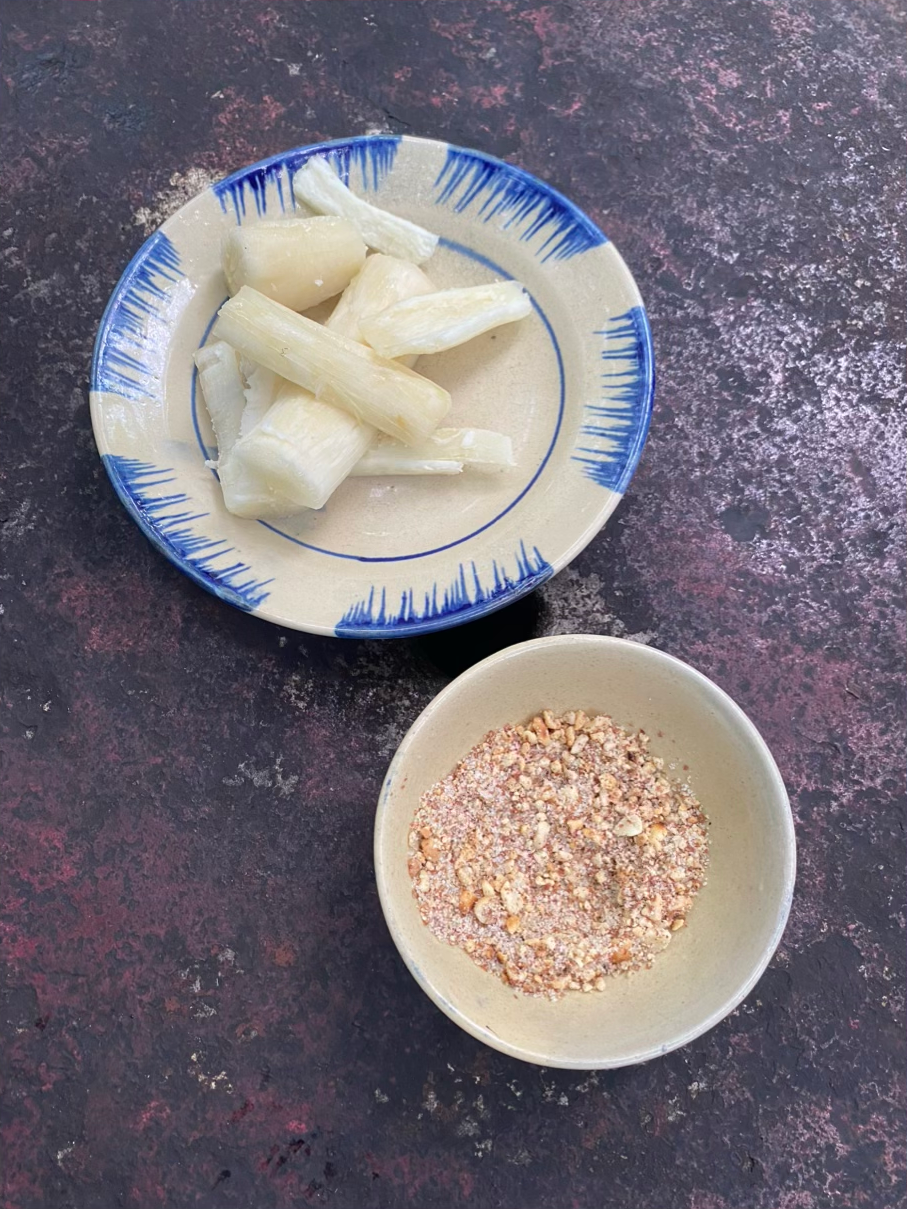
After the tunnels, you get to try steamed cassava with crushed peanuts, a staple food when supplies were short during the war. It's included in your ticket.
It tasted a bit like chestnut, and the girls happily ate theirs. If that's not for you, there's also a small snack stand where you can buy ice cream, which our girls were far more excited about.

The shooting range and sandal-making
You'll also see a demonstration of how sandals were made from old tyres. There's a shooting range on site where you can fire an AK-47 or other weapons, paying per bullet. Expect to pay around 40,000 to 60,000 VND per bullet, usually with a minimum of 10, and you need to be at least 16 to shoot, so it isn't an option for kids.
We skipped it, mainly because of the noise for the girls. You'll hear the shots from around the site either way.
You'll also find a gift shop selling souvenirs made from bullet casings and old tyres.
When Is the Best Time to Visit the Cu Chi Tunnels?
The dry season, from December to April, is the best time to visit. The paths aren't muddy and it's a little less humid. The rainy season (roughly May to November) brings afternoon downpours, muddy trails and more mosquitoes, although it's also quieter.
We visited in late October and we didn't experience any bad weather, but it was very hot.
Whatever the month, go early. Arriving before 9 am means it's cooler, and you'll beat most of the tour groups. Late afternoon is the next best option. Midday is the hottest and busiest time, especially underground.
Weekends are busier with local visitors, so a weekday is better if you can choose.
How Long Do You Need at the Cu Chi Tunnels?

We spent a few hours on site. That's enough for the film, the guided tunnels, a few slightly odd information displays, the traps and the cassava tasting without rushing.
With around 2 hours in the car each way to Ben Duoc, though, it's really a full day out. Plan a quiet evening afterwards.
Are the Cu Chi Tunnels Suitable for Kids?

Yes, if your kids are old enough to decide for themselves whether they want to go underground. It also depends on their interests and comfort level with the topic of war. Ours were 8 and 10, and they had very different experiences, although that wasn't a surprise. Jess didn't enjoy visiting a war museum back home in Calgary, whereas Evelyn loved it.
Evelyn was fascinated by Cu Chi. She'd been interested in the Vietnam War ever since our visit to the War Remnants Museum the day before, and she happily went through every tunnel we did.
Jess is much more cautious and didn't enjoy the tunnels themselves, but she still chose to try one and came out the other side proud of herself.
For us, that was one of the most rewarding parts of the day. We wrote more about moments like that in Beyond the Classroom: 10 Worldschooling Life Skills.
A few things to think about before you go:
Claustrophobia. If a child (or adult) is claustrophobic, they probably won't enjoy the tunnels. Start with the walk-through and decide from there.
The war history. The film and trap display are quite direct. Talk to your kids about what they'll see beforehand.
The heat. It's a lot hotter underground than it is outside, and incredibly stuffy.
Let each child choose their own level. The guide grading the tunnels made this easy, and nobody felt pushed.
The memorial temple. It's a place of remembrance, so remind kids to keep their voices down.
If your kids can handle a museum about the war, they can handle the Cu Chi Tunnels. They don't have to go underground to get something out of the day.
Tips for Visiting the Cu Chi Tunnels
Go early, and avoid weekends. It's cooler and quieter in the morning, and weekends are busier with local visitors.
Wear clothes you don't mind getting dirty. You'll be crouching and brushing against dirt walls. Long trousers help against mosquitoes, and wear closed-toe shoes rather than flip-flops.
Bring water, sunscreen and bug spray. The site is in the forest.
Take a torch, or use your phone light. The tunnels are dark, and a bit of light makes them feel much less closed in, which helps with nervous kids.
Bring cash for tickets and snacks.
Bring a sick bag for the drive if anyone gets car sick.
Consider arranging your ride back before you go in. If you're going by Grab, you might want to agree with your driver that they'll wait.
Don't feel you have to do every tunnel. The walk-through gives you a good feel for it.
Is It Worth Going to the Cu Chi Tunnels?
Yes, 100%.
It was one of the best worldschooling days we had in Vietnam, and one of the experiences that the girls still bring up without being asked. You can read about the war, but feeling the heat and the dark in the tunnels makes it real in a way a book can't.
It isn't for everyone. Skip it if anyone in your family is claustrophobic or likely to be upset by war history. But for most families with school-age kids, it's well worth the long drive.
Go to Ben Duoc, take a Grab or a small-group tour, and listen to your guide.
For the full story of our day, read our Day 25 diary entry. If you're interested in learning through travel, see our real examples of worldschooling from our 100-day trip.
Heading north as well? See our guides to the best things to do in Hanoi and the best things to do in Ninh Binh.
We're a Calgary-based family that travelled for 100 days through Asia, Australia and New Zealand with our two daughters. Read about how we planned our round-the-world trip.


Comments